
In today’s rapidly evolving digital landscape, headless e-commerce is emerging as a transformative approach to online retail. This innovative model decouples the front-end presentation layer (the “head”) from the back-end e-commerce functionality, offering businesses unparalleled flexibility, scalability, and control over their online presence. This deep dive will explore the core principles of headless e-commerce, examining its key benefits and addressing the common challenges businesses face when implementing this powerful architecture. Whether you’re a seasoned e-commerce professional or just beginning to explore the possibilities of headless solutions, understanding this paradigm shift is crucial for staying competitive in the modern marketplace.
This article will provide a comprehensive overview of headless e-commerce, delving into its technical underpinnings and demonstrating how it empowers businesses to create truly unique and engaging customer experiences. We’ll examine the advantages of leveraging APIs to connect various front-end systems, such as mobile apps, progressive web apps (PWAs), and Internet of Things (IoT) devices, to a robust and scalable e-commerce backend. Furthermore, we’ll discuss the critical considerations for selecting the right headless e-commerce platform and the essential steps involved in successfully implementing a headless architecture. Join us as we unlock the power of headless e-commerce and discover how it can revolutionize your online business.
What is Headless E-Commerce?
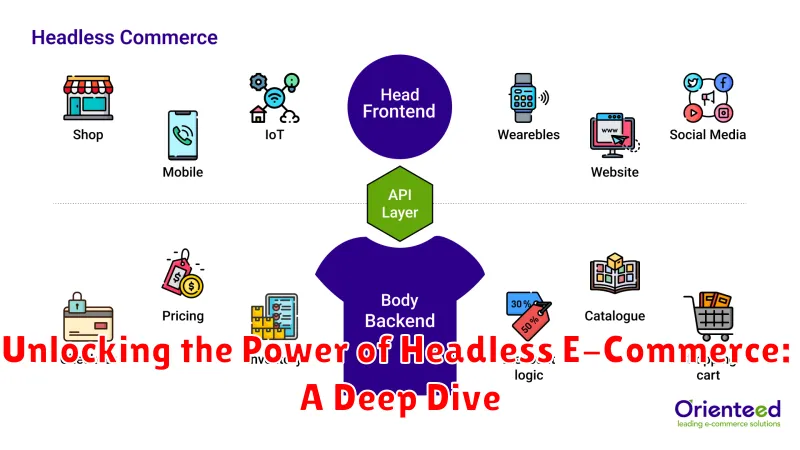
Headless e-commerce is an approach to online retail that decouples the front-end presentation layer (the “head”) from the back-end e-commerce functionality (the “body”). This separation allows businesses to manage their online store’s content and user experience independently from the underlying e-commerce platform.
In a traditional e-commerce setup, the front-end and back-end are tightly integrated. A headless architecture, however, utilizes APIs to connect the two. This provides greater flexibility and control over the customer journey.
Think of it like this: the back-end is the engine of your car, responsible for all the core functions. The front-end is the steering wheel, dashboard, and pedals – how you interact with the engine. Headless e-commerce allows you to swap out the steering wheel and dashboard (the front-end) without changing the engine (the back-end).
By using APIs, businesses can deliver content to virtually any device or platform – from websites and mobile apps to IoT devices and social media channels. This approach is crucial in today’s omnichannel landscape.
How Does Headless E-Commerce Work?
Headless e-commerce operates on the principle of separating the frontend presentation layer (the “head”) from the backend commerce functionality. This decoupling is achieved through an API (Application Programming Interface), which acts as the intermediary between the two.
When a customer interacts with the frontend, requests for data, such as product information or customer details, are sent to the backend via the API. The backend processes these requests and returns the necessary data, again through the API, in a structured format, typically JSON. This allows the frontend to display the information in any desired manner, independent of the backend platform.
This separation of concerns provides immense flexibility. The backend focuses solely on managing commerce operations, while the frontend can be customized and optimized for various touchpoints, including websites, mobile apps, IoT devices, and more, all powered by the same underlying commerce engine.
Advantages of Adopting a Headless E-Commerce Architecture
Headless e-commerce offers a range of benefits for businesses seeking enhanced flexibility and scalability.
A key advantage is improved front-end flexibility. Decoupling the front-end from the back-end allows developers to use any technology they choose, leading to faster development cycles and more customized user experiences.
Omnichannel agility is another significant benefit. Headless architecture enables businesses to deliver consistent brand experiences across various touchpoints, including websites, mobile apps, IoT devices, and social media platforms.
Enhanced scalability and performance are also realized with headless e-commerce. The independent nature of the front-end and back-end allows each to scale independently, leading to improved performance and responsiveness, especially during peak traffic periods.
Finally, headless e-commerce promotes faster time to market. The ability to quickly iterate and deploy changes on the front-end without affecting the back-end streamlines development and enables businesses to launch new features and products more efficiently.
Exploring the Differences Between Headless and Traditional E-Commerce
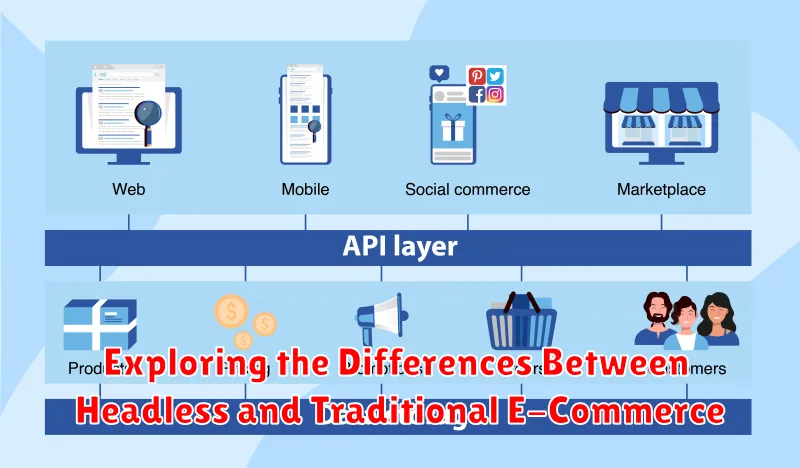
A key distinction between headless and traditional e-commerce lies in the separation of the front-end (presentation layer) and the back-end (commerce functionality).
In traditional e-commerce platforms, both the front-end and back-end are tightly coupled. This monolithic architecture limits flexibility and customization. Changes to the front-end often require modifications to the back-end, making updates complex and time-consuming.
Headless e-commerce, on the other hand, decouples the front-end from the back-end. The back-end becomes a set of APIs that deliver content and functionality to any front-end interface. This allows businesses to choose the best front-end technologies for their needs and deliver seamless customer experiences across multiple touchpoints.
| Feature | Traditional E-Commerce | Headless E-Commerce |
|---|---|---|
| Front-End/Back-End | Tightly Coupled | Decoupled |
| Flexibility | Limited | High |
| Customization | Restricted | Extensive |
Use Cases for Headless E-Commerce Implementations
Headless e-commerce offers a versatile approach suitable for diverse business needs. Here are some key use cases where it shines:
Omnichannel Experiences
Expanding beyond the traditional webstore, headless allows businesses to deliver seamless shopping experiences across various touchpoints like IoT devices, social media platforms, and mobile applications. This creates a unified and consistent brand experience for customers, regardless of where they interact.
Experiential Commerce
With full control over the presentation layer, brands can craft highly customized and engaging shopping journeys. This is particularly valuable for businesses seeking to create unique, immersive online experiences tailored to specific target audiences.
Rapid Iterations and Scalability
The decoupled architecture of headless e-commerce enables faster development cycles and easier scaling. Front-end changes can be implemented without impacting the backend, allowing for quicker responses to market demands and improved agility.
B2B Implementations
Headless is increasingly popular in B2B scenarios due to its flexibility in integrating with existing systems like CRM and ERP platforms. This facilitates streamlined operations and personalized customer experiences within complex business workflows.
Choosing the Right Headless E-Commerce Platform
Selecting the right headless e-commerce platform is a critical decision. Factors such as your business size, budget, and technical expertise play a significant role.
Consider your scalability needs. Will the platform handle your growth? Examine the platform’s API capabilities. A robust and well-documented API is crucial for seamless integrations.
Evaluate the platform’s content management capabilities. How easy is it to manage product information and other content? Think about your existing tech stack. Choose a platform that integrates well with your current systems.
Finally, research the vendor’s reputation and support. A reliable vendor with strong support can save you time and resources in the long run. Choosing the correct platform sets the foundation for a successful headless e-commerce implementation.
Integrating Headless E-Commerce with Your Existing Systems
Integrating a headless e-commerce platform with your existing systems is a critical step in leveraging its full potential. This integration allows for a seamless flow of data between your e-commerce platform and other essential business tools.
Key systems you’ll likely need to integrate include your CRM (Customer Relationship Management), ERP (Enterprise Resource Planning), CMS (Content Management System), and any marketing automation platforms you utilize. This connection enables personalized customer experiences, streamlined order fulfillment, and efficient inventory management.
Several approaches exist for integration, including using pre-built connectors, leveraging APIs (Application Programming Interfaces), or building custom integrations. The best approach depends on the specific systems involved and the complexity of the integration.
API-driven integrations offer the most flexibility and control, allowing you to tailor the data exchange to your precise needs. A well-defined API strategy ensures a robust and scalable integration that can adapt to future business requirements.
Best Practices for Headless E-Commerce Development
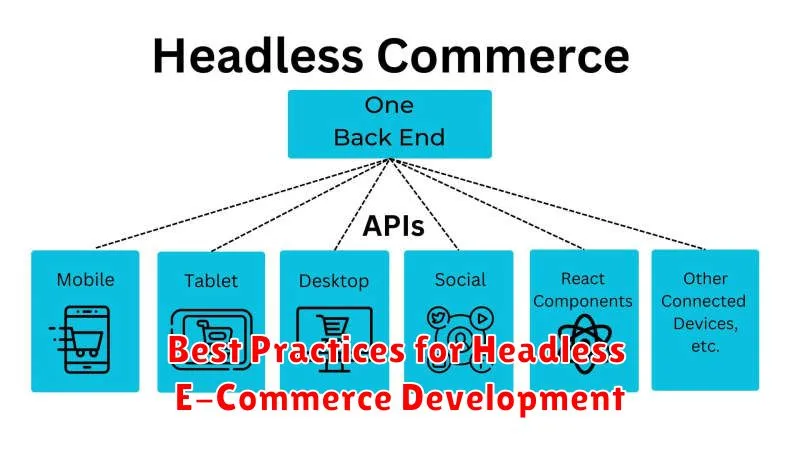
Embarking on a headless e-commerce development project requires careful planning and adherence to best practices. Prioritize API-first design, ensuring your APIs are well-documented, robust, and scalable. This facilitates seamless integration with various front-end and third-party systems.
Thorough testing is crucial. Implement automated testing throughout the development lifecycle, including unit, integration, and end-to-end tests. This ensures the stability and reliability of your headless architecture.
Performance optimization is paramount. Employ caching strategies, optimize database queries, and minimize API request overhead. A fast and responsive user experience is key for customer satisfaction and conversion rates.
Security must be a top priority. Implement robust authentication and authorization mechanisms to protect sensitive customer data and prevent unauthorized access to your system. Regular security audits and vulnerability assessments are essential.
Future Trends in Headless E-Commerce
The headless e-commerce landscape is constantly evolving. Several key trends are shaping its future, promising even more flexibility and power for businesses.
Artificial Intelligence (AI) will play a larger role, powering personalized product recommendations, dynamic pricing, and automated customer service. Expect to see more AI-driven merchandising and marketing strategies emerging.
The rise of composable commerce takes the modularity of headless further. Businesses can select and combine best-of-breed solutions for specific functionalities, creating highly customized and optimized e-commerce stacks.
Progressive Web Apps (PWAs) are continuing to gain traction. Their ability to deliver app-like experiences through the browser, combined with the flexibility of headless architecture, makes them a compelling option for reaching customers on any device.
Serverless architecture will further simplify the technical management of headless e-commerce. By abstracting away server infrastructure, businesses can focus on innovation and customer experience rather than technical complexities.
Finally, expect a greater emphasis on privacy and security. As data becomes increasingly valuable, headless solutions that prioritize data protection will become more prevalent.
