
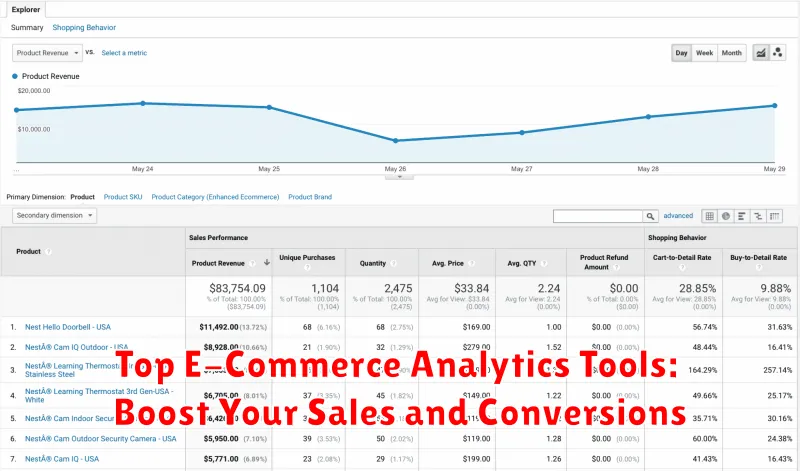
In today’s competitive e-commerce landscape, leveraging data-driven insights is no longer a luxury, but a necessity. Understanding customer behavior, optimizing marketing campaigns, and streamlining operations are crucial for success. E-commerce analytics tools provide the power to unlock these insights, empowering businesses to make informed decisions that boost sales and conversions. This article explores the top e-commerce analytics tools available, examining their key features, benefits, and how they can help you achieve your business objectives. Whether you’re looking to improve conversion rates, enhance customer lifetime value, or refine your marketing ROI, the right analytics tool can be transformative.
From comprehensive platforms offering a holistic view of your e-commerce performance to specialized tools focusing on specific areas like customer segmentation or A/B testing, a wide range of solutions exists to cater to diverse needs. This guide will equip you with the knowledge to choose the best e-commerce analytics tools tailored to your specific requirements. Discover how these powerful tools can unlock the full potential of your online store and drive significant growth by providing actionable insights into customer behavior, sales trends, and marketing effectiveness.
Understanding the Importance of E-Commerce Analytics
In today’s competitive digital landscape, e-commerce analytics are crucial for businesses to thrive. Data-driven insights empower online retailers to make informed decisions, optimize their strategies, and ultimately, boost sales and conversions.
Without a clear understanding of customer behavior, website performance, and marketing effectiveness, businesses are essentially operating in the dark. E-commerce analytics shed light on these critical areas, providing valuable information about how customers interact with your online store.
By leveraging analytics, you can identify trends, pinpoint areas for improvement, and personalize the customer experience. Tracking key metrics provides a solid foundation for making strategic adjustments to pricing, product offerings, marketing campaigns, and website design.
Ultimately, understanding and utilizing e-commerce analytics transforms raw data into actionable intelligence, enabling businesses to gain a competitive edge and achieve sustainable growth.
Key Metrics to Track in Your E-Commerce Business
Tracking the right metrics is crucial for understanding your e-commerce performance. Key Performance Indicators (KPIs) provide valuable insights into customer behavior, sales trends, and overall business health. By monitoring these metrics, you can identify areas for improvement and optimize your strategies for growth.
Some of the most important metrics include:
- Conversion Rate: The percentage of visitors who complete a purchase. This metric highlights the effectiveness of your sales funnel.
- Average Order Value (AOV): The average amount spent per order. Increasing AOV can significantly impact revenue.
- Customer Lifetime Value (CLTV): The total revenue generated by a customer over their relationship with your business. Understanding CLTV helps prioritize customer retention efforts.
- Cart Abandonment Rate: The percentage of customers who add items to their cart but don’t complete the purchase. Analyzing this metric can reveal friction points in the checkout process.
- Website Traffic: The number of visitors to your website. Monitoring traffic sources helps identify effective marketing channels.
Exploring the Best E-Commerce Analytics Tools
Choosing the right analytics tools can significantly impact your e-commerce success. A variety of platforms cater to different needs and budgets. Here’s a brief overview of some popular options:
Google Analytics
A widely used free tool, Google Analytics provides comprehensive data on website traffic, user behavior, and conversions. It’s a powerful starting point for most businesses.
Enhanced Ecommerce Platforms (Shopify, BigCommerce, etc.)
Many e-commerce platforms offer built-in analytics dashboards. These provide readily accessible data specifically related to sales, product performance, and customer behavior within your platform.
Dedicated E-commerce Analytics Tools
Tools like Kissmetrics and Mixpanel offer more advanced analytics, including cohort analysis and customer journey mapping. These are valuable for businesses looking for deeper insights into customer behavior.
| Tool | Focus | Best For |
|---|---|---|
| Google Analytics | Website Traffic & Conversions | Beginners, Businesses on a Budget |
| Shopify Analytics, etc. | Platform-Specific Sales & Product Data | Users of Specific Platforms |
| Kissmetrics, Mixpanel, etc. | Advanced Customer Behavior Analysis | Larger Businesses, Advanced Users |
Features to Look for in an E-Commerce Analytics Platform
Choosing the right e-commerce analytics platform is crucial for success. When evaluating different options, consider these key features:
Real-time Reporting:
Access up-to-the-minute data on sales, traffic, and customer behavior to make quick, informed decisions.
Customer Segmentation:
Identify and analyze specific customer groups based on demographics, purchase history, and other criteria to personalize marketing efforts.
Sales Funnel Analysis:
Track customer journeys through the sales funnel to pinpoint areas of friction and optimize conversion rates.
Product Performance Analysis:
Monitor which products are selling well and which are underperforming to adjust inventory and marketing strategies.
Marketing Campaign Tracking:
Measure the effectiveness of your marketing campaigns across different channels to understand what’s driving ROI.
Customizable Dashboards and Reports:
Tailor your view of the data to focus on the metrics most important to your business.
Integration Capabilities:
Ensure the platform seamlessly integrates with your existing e-commerce platform, CRM, and other marketing tools.
How to Use Analytics Data to Improve Sales
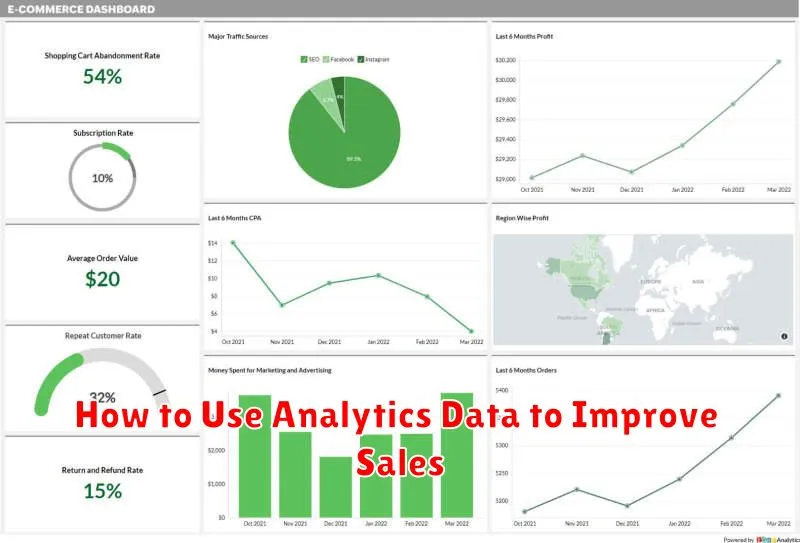
Collecting data is only the first step. The true power of analytics lies in its application to improve your bottom line. Analyzing data allows you to identify areas of strength and weakness within your e-commerce operations.
For example, a high cart abandonment rate signals a problem in the checkout process. Perhaps unexpected shipping costs or a complicated payment gateway are deterring customers. Data analysis can pinpoint these friction points.
Furthermore, analyzing customer behavior helps optimize product offerings and marketing campaigns. If data reveals a particular product category is underperforming, you can adjust pricing, run promotions, or improve product descriptions. Similarly, understanding which marketing channels drive the most conversions allows you to allocate resources effectively.
By leveraging analytics insights, you can make data-driven decisions to enhance the customer journey, personalize the shopping experience, and ultimately, boost sales and conversions.
Tips for Setting Up and Implementing E-Commerce Analytics
Effectively leveraging e-commerce analytics requires careful setup and implementation. Start by defining clear objectives. What do you want to achieve with your data? Increased conversions? Improved customer retention? Identifying your goals will guide your analytics setup.
Next, choose the right analytics platform. Consider factors like your budget, technical expertise, and the specific data points you need to track. Ensure proper integration with your e-commerce platform for seamless data collection.
Accurate data tracking is crucial. Implement robust tracking mechanisms to capture key metrics like website traffic, conversion rates, and customer behavior. Regularly audit your tracking setup to identify and fix any discrepancies.
Finally, establish a clear reporting process. Determine the key performance indicators (KPIs) you will monitor and how often you will generate reports. This ensures you’re consistently analyzing data and making informed decisions based on your findings.
Best Practices for Data-Driven Decision Making

Data-driven decision making empowers e-commerce businesses to optimize strategies and improve performance. Prioritize defining clear, measurable objectives before diving into data analysis. What specific outcomes are you aiming for?
Segment your data for deeper insights. Analyzing data by demographics, purchase history, or website behavior can reveal hidden trends and customer preferences. Avoid making assumptions based on aggregated data. Deeper segmentation is key.
Regularly monitor key performance indicators (KPIs) relevant to your objectives. Track conversion rates, average order value, customer lifetime value, and other metrics. Establish a consistent reporting schedule to track progress and identify areas needing improvement.
Test and iterate on your strategies based on data analysis. A/B testing different website designs, marketing campaigns, or pricing strategies can reveal what resonates most effectively with your target audience. Embrace experimentation and continuous optimization.
Integrating Analytics with Other E-Commerce Tools
Integrating your analytics platform with other e-commerce tools is crucial for a comprehensive understanding of your business performance. This integration unlocks a seamless flow of data, enabling you to leverage insights across different platforms and make data-driven decisions.
Connecting your analytics with your CRM (Customer Relationship Management) system provides a 360-degree view of your customers. This allows for personalized marketing campaigns and targeted customer service efforts. By combining transactional data with customer behavior, you can identify high-value customers and tailor your strategies accordingly.
Integration with email marketing platforms allows you to track the effectiveness of your email campaigns and measure their impact on sales. Analyze open rates, click-through rates, and conversion rates to optimize your email content and target specific customer segments.
Inventory management systems, when integrated with analytics, can help you optimize stock levels, predict demand, and avoid stockouts or overstocking. Understanding product performance data can inform purchasing decisions and improve overall inventory efficiency.
Measuring the ROI of Your Analytics Efforts
Demonstrating the value of your e-commerce analytics investment is crucial. Return on Investment (ROI) measurement provides concrete evidence of its effectiveness.
Start by defining key performance indicators (KPIs) directly linked to your business objectives. These could include conversion rate, average order value, customer lifetime value, and cart abandonment rate. Track these KPIs before and after implementing your analytics tools.
Calculate the financial impact of improvements. For instance, if your conversion rate increases by 2% after implementing a new analytics strategy, calculate the additional revenue generated from those conversions. Subtract the cost of the analytics tools and any associated implementation expenses from this increased revenue.
The resulting figure represents your net profit, a direct measure of the ROI. Express this as a percentage of your analytics investment for a clear and concise ROI metric. Regularly monitor and analyze these metrics to refine your strategies and maximize the impact of your e-commerce analytics tools.
