
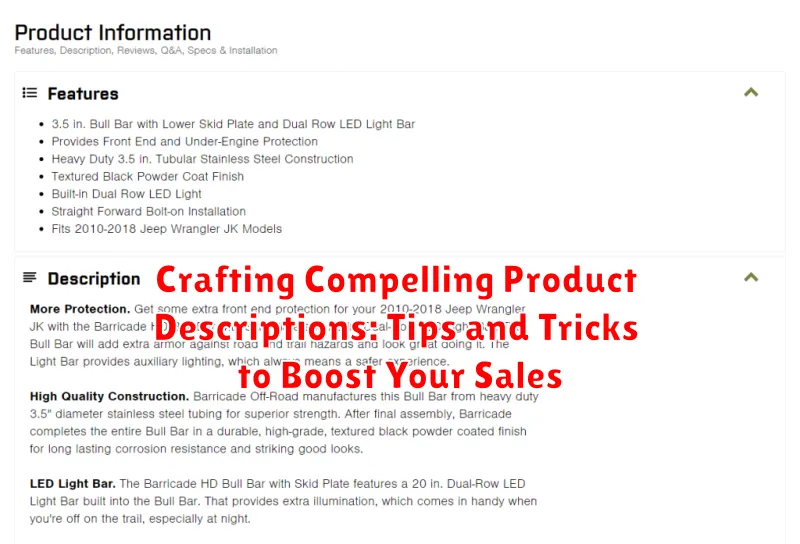
In today’s competitive e-commerce landscape, crafting compelling product descriptions is paramount to success. Product descriptions are more than just a list of features; they are your opportunity to connect with potential customers, highlight the value of your product, and ultimately, boost your sales. Effective descriptions inform, persuade, and inspire action, turning casual browsers into paying customers. This article will delve into the essential tips and tricks for writing product descriptions that convert, helping you maximize your sales potential and stand out from the competition.
Learn how to transform mundane product details into engaging narratives that resonate with your target audience. Discover the power of persuasive language, strategic keyword integration, and compelling storytelling to captivate your readers and drive conversions. Mastering the art of crafting compelling product descriptions is a crucial skill for any online retailer looking to boost sales and establish a strong brand presence. From understanding your ideal customer to optimizing for search engines, this guide will equip you with the knowledge and techniques to write product descriptions that truly sell.
The Importance of Well-Written Product Descriptions
Well-written product descriptions are crucial for driving sales. They serve as the online salesperson, providing potential customers with the information they need to make a purchase decision. A poorly written description can lead to lost sales, even if the product itself is excellent. Conversely, a compelling description can significantly boost conversions.
Effective descriptions bridge the gap between the product and the customer. They answer key questions, address potential concerns, and ultimately persuade the shopper to click that “add to cart” button. They build trust by providing transparency and clarity. Imagine a customer encountering a vague or confusing description; they are far more likely to abandon their purchase and seek a competitor with clearer information.
Furthermore, strong product descriptions contribute to a positive brand image. They demonstrate professionalism, attention to detail, and a commitment to customer satisfaction. This builds confidence in your brand and encourages repeat business.
Understanding Your Target Audience
Before crafting a single word, understand your ideal customer. Who are they? What are their needs, motivations, and pain points? A product description that resonates with a teenager will likely fall flat with a senior citizen. Knowing your target audience informs every aspect of your description, from the language you use to the benefits you highlight.
Consider these key questions:
- What are their demographics (age, gender, location, income, etc.)?
- What are their psychographics (lifestyle, values, interests)?
- What problems does your product solve for them?
- What language do they use when searching for similar products?
By answering these questions, you can tailor your product descriptions to speak directly to your target audience, creating a more personalized and persuasive experience that drives conversions.
Highlighting Key Features and Benefits
Clearly showcasing your product’s features and benefits is crucial for converting browsers into buyers. Don’t just list specifications; explain how those features translate into tangible advantages for the customer. Focus on the “what’s in it for me?” aspect.
Start by identifying the core features. These are the factual attributes of your product (e.g., material, size, weight, technical specifications). Then, articulate the corresponding benefits. A benefit describes how the feature improves the customer’s life or solves a problem.
For example, instead of simply stating “Made with durable stainless steel,” explain the benefit: “Crafted from durable stainless steel, this water bottle can withstand daily wear and tear, ensuring it stays your hydration companion for years to come.”
Use bullet points or lists to highlight key features and benefits concisely, making the information easy to digest for potential customers. Prioritize the most compelling aspects to grab attention quickly.
Using Persuasive Language and Tone
Persuasive language is crucial for transforming potential customers into buyers. Focus on the benefits your product offers rather than simply listing features. For example, instead of stating “500GB hard drive,” say “Store thousands of photos and videos with ample storage space.” This approach resonates more effectively with customers by addressing their needs.
Employ sensory language to create a vivid picture in the customer’s mind. Describe textures, smells, tastes, and sounds where appropriate. This allows the customer to virtually experience the product before purchasing.
Use power words strategically to evoke emotion and drive action. Words like “guaranteed,” “proven,” “exclusive,” and “discover” can enhance the perceived value and desirability of your product.
Maintain a consistent tone that aligns with your brand identity and target audience. Whether you opt for a friendly, professional, or luxurious tone, ensure it remains consistent across all product descriptions. This creates a cohesive and trustworthy brand image.
Optimizing Product Descriptions for Search Engines
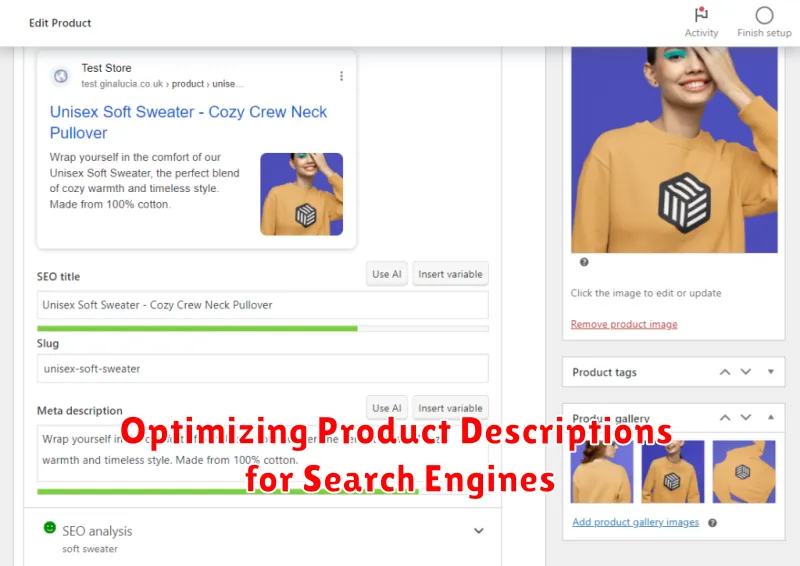
Optimizing your product descriptions for search engines is crucial for driving organic traffic and increasing visibility to potential customers. By incorporating relevant keywords, you can improve your product’s ranking in search results. Keyword research is the first step, identifying terms your target audience uses when searching for products like yours.
Strategically incorporate these keywords throughout your product description, including in the title, headings, and body text. However, avoid keyword stuffing, which can negatively impact your ranking. Focus on creating a natural and readable description that provides value to the user while incorporating relevant keywords.
Use long-tail keywords – longer, more specific phrases – to target niche searches. For example, instead of “shoes,” use “women’s running shoes for flat feet.” This helps attract qualified leads who are actively searching for specific product features.
Additionally, ensure your product descriptions are unique. Duplicate content can harm your SEO. Write original descriptions for each product, highlighting its unique selling points and benefits.
Structuring Your Product Descriptions for Readability
Readability is key when it comes to product descriptions. Consumers should be able to quickly grasp the key features and benefits of your product.
Use short paragraphs and bullet points to break up large blocks of text. This makes the information easier to digest and scan. Avoid dense paragraphs that can overwhelm potential buyers.
Headings and subheadings can further improve readability by organizing information logically. Use them to highlight key features or sections within the description.
Consider using bold text to emphasize important keywords and product specifications. This helps draw attention to critical details.
Finally, choose a clear and concise font that is easy on the eyes. Ensure the font size is appropriate for your website’s design and target audience.
Showcasing Social Proof and Customer Testimonials
Social proof is a powerful tool for influencing purchasing decisions. By showcasing positive experiences from other customers, you build trust and credibility for your product.
Customer testimonials are a direct form of social proof. Feature snippets of reviews that highlight key product benefits or address common concerns. Short, impactful quotes work best.
Ratings and reviews provide quantifiable social proof. Displaying average star ratings alongside the number of reviews offers a quick overview of customer satisfaction. Encourage customers to leave reviews after purchase.
Influencer endorsements can significantly boost your product’s visibility and appeal to a wider audience. Partner with influencers who align with your brand and target demographic to generate authentic and impactful content.
Social media engagement can be incorporated as social proof. Highlighting positive comments, shares, and user-generated content related to your product showcases its popularity and builds community around your brand.
Adding High-Quality Images and Videos
Visual content plays a crucial role in online sales. High-quality images and videos can significantly enhance a customer’s understanding of your product and build trust in your brand. Showcase your product from multiple angles, highlighting key features and benefits.
Images should be clear, well-lit, and professionally shot. Consider using a variety of images, including close-ups to demonstrate texture and detail, and lifestyle shots to illustrate the product in use.
Videos offer an even more engaging way to present your product. A short demonstration video can effectively communicate functionality and value. Keep videos concise and focused on the key selling points. Ensure your videos are professionally edited and optimized for fast loading times.
Invest in professional photography and videography when possible. The quality of your visual content reflects the quality of your product and brand. Remember, strong visuals can significantly influence purchasing decisions.
Tips for Writing Product Descriptions that Convert
Focus on the benefits, not just the features. Customers are interested in what a product can do for them. Explain how the product solves a problem or improves their lives.
Use strong action verbs. Engage the reader with vibrant language that creates a sense of excitement and encourages action. Words like “discover,” “transform,” and “experience” can be particularly effective.
Keep it concise and easy to read. Use short sentences and paragraphs to avoid overwhelming the reader. Bullet points and white space can improve readability.
Optimize for search engines. Incorporate relevant keywords that customers are likely to use when searching for products like yours. This helps improve your product’s visibility in search results.
Maintain a consistent tone and style. This ensures a unified brand voice across all your product descriptions.
