
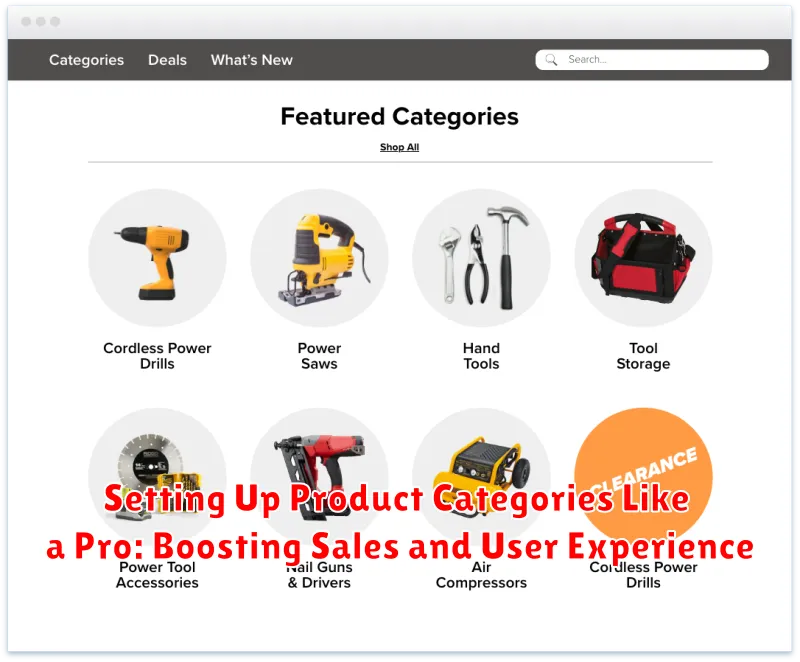
In the competitive e-commerce landscape, effectively organizing your products is paramount to success. Product categories play a crucial role in both boosting sales and enhancing user experience. A well-structured product categorization system allows customers to effortlessly navigate your online store, quickly locate desired items, and ultimately, complete purchases with ease. This, in turn, reduces bounce rates, improves conversion rates, and contributes to a seamless and positive shopping experience. Learn how strategic product category setup can be a game-changer for your business.
This comprehensive guide will delve into the best practices for setting up product categories like a pro. From understanding the importance of a logical hierarchy to leveraging keyword research for product category optimization, we will cover every aspect of creating a robust and user-friendly categorization system. Whether you’re launching a new online store or looking to revamp your existing product categories, this article will provide you with actionable insights to maximize your sales potential and elevate your customers’ browsing experience. Discover the power of effective product categorization.
Planning Your Product Hierarchy
A well-defined product hierarchy is the backbone of a successful e-commerce strategy. It provides the framework for organizing your products, making it easier for customers to find what they’re looking for and boosting your overall sales. Before creating your categories, take the time to carefully plan the structure.
Start by analyzing your product catalog. Consider the breadth and depth of your offerings. A simple hierarchy might suffice for a smaller inventory, while a more complex, tiered structure is essential for larger businesses with diverse product lines.
Think from the customer’s perspective. How would they search for your products? What terms would they use? Understanding their search behavior will inform your category naming and structure.
Flexibility is key. Your business and product offerings will likely evolve, so design a hierarchy that can accommodate future growth and expansion without requiring a complete overhaul.
Creating Main and Subcategories
Establishing a clear hierarchy of main and subcategories is crucial for organizing your products effectively. Begin by identifying broad main categories that encompass the overall types of products you offer. Think of these as the primary navigational points for your customers.
For example, a clothing retailer might use main categories such as “Men’s,” “Women’s,” and “Children’s.” Within each main category, create subcategories to further refine product groupings. Under “Men’s,” you might have subcategories like “Shirts,” “Pants,” “Shoes,” and “Accessories.”
The key is to strike a balance. Too few categories can make browsing overwhelming, while excessive categorization can make finding specific products difficult. Aim for a structure that feels intuitive and allows customers to quickly drill down to what they are searching for.
Consider the breadth of your product offerings. If a main category contains a large number of diverse items, creating multiple layers of subcategories (e.g., “Men’s” -> “Shirts” -> “Dress Shirts” -> “Long Sleeve Dress Shirts”) might be necessary for enhanced organization.
Using Descriptive Category Names
Clear and concise category names are crucial for both user experience and SEO. Descriptive names help customers quickly understand what products they’ll find within a category, reducing frustration and improving navigation. They also play a significant role in search engine optimization, helping search engines understand the context of your products and potentially boosting your rankings for relevant keywords.
Avoid using generic terms or internal jargon. Instead, opt for terms your target audience uses when searching for products like yours. Think about the words customers would type into a search bar. For example, instead of “Accessories,” consider more specific names like “Phone Cases,” “Laptop Bags,” or “Wireless Headphones.” This specificity makes it easier for users to find exactly what they’re looking for.
Consistency is key when choosing category names. Maintain a uniform style throughout your website. Decide whether to use title case, sentence case, or lowercase, and stick with it. This consistent approach creates a professional and organized impression, further enhancing the user experience.
Optimizing for Navigation and Search
Effective product categorization significantly impacts both website navigation and search engine optimization (SEO). A well-structured category system allows customers to easily browse and locate desired products, leading to increased sales and a positive user experience. Simultaneously, optimized categories improve a website’s visibility in search engine results, driving organic traffic.
Keyword Research plays a vital role in optimizing category names and descriptions. Identify relevant keywords that customers use when searching for products within your niche. Integrate these keywords naturally within category names and descriptions to improve search engine ranking.
User-Friendly URLs contribute to both navigation and SEO. Ensure category URLs are short, descriptive, and include relevant keywords. Avoid complex URLs with unnecessary parameters.
Internal Linking within category descriptions helps establish context and relevance for search engines. Link to related subcategories or specific product pages to enhance navigation and improve SEO.
Maintaining Consistent Category Structure
A consistent category structure is crucial for long-term success. Inconsistencies confuse customers and make it difficult to manage your product catalog effectively. Regularly review and refine your categories to ensure they remain aligned with your business goals and customer expectations.
Establish clear guidelines for creating and assigning new categories. This helps maintain uniformity across your entire product range, even as it expands.
Periodic audits are essential. Review your category structure for redundancies, outdated classifications, and areas for improvement. This helps ensure your structure remains relevant and easy to navigate.
Consider future growth. Your chosen structure should be scalable enough to accommodate new product lines and expansions without requiring significant overhauls.
Adding Products to the Right Categories
Proper categorization is crucial for both discoverability and user experience. Misplaced products lead to customer frustration and lost sales. Accuracy is key. Each product should reside in the most relevant category, reflecting its core function and purpose.
Consider the specificity of your categories. Avoid overly broad categories that lump disparate items together. Conversely, excessively narrow categories can make navigation tedious. Strive for a balanced hierarchy.
Consistency is paramount. Establish clear criteria for categorization and apply them uniformly across all products. This ensures predictability and helps customers easily locate what they need. Use a standardized naming convention to avoid confusion and maintain a professional appearance.
Think from the customer’s perspective. How would they search for this product? What keywords would they use? Use this insight to guide your categorization decisions.
Utilizing Category Images and Descriptions
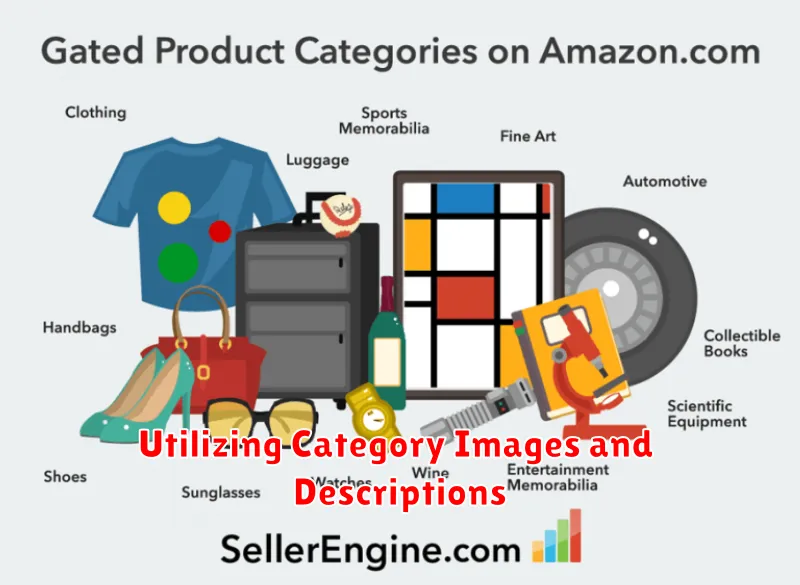
Visual appeal plays a crucial role in attracting customers. High-quality category images significantly enhance the browsing experience. Select images that clearly represent the products within that category. For example, a category for “Winter Coats” should feature a compelling image of a winter coat, ideally showcasing its warmth and style.
Descriptive category names are just as important. Instead of a generic name like “Shoes,” consider more specific options like “Men’s Running Shoes” or “Women’s Dress Shoes.” This clarity helps customers quickly find what they’re looking for.
Further enhance navigation with concise yet informative category descriptions. Briefly explain what the category encompasses, highlighting key features or benefits. This helps customers understand the category’s purpose and encourages them to explore further. For example, in the “Men’s Running Shoes” category, the description might mention key features like breathability, cushioning, and support.
Analyzing Category Performance
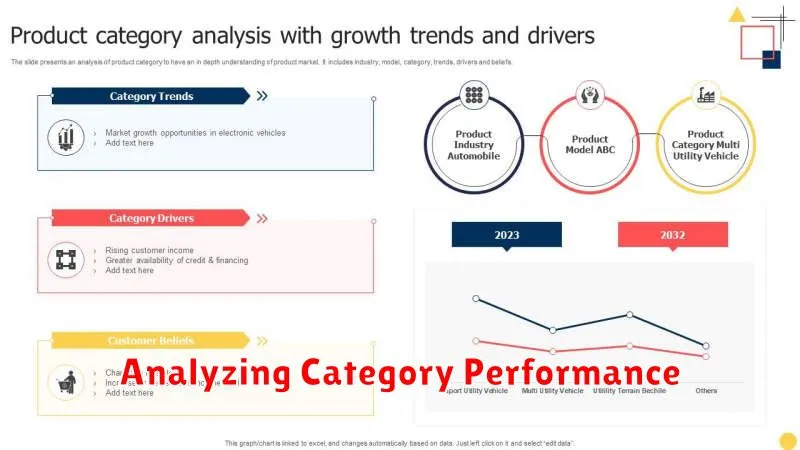
Analyzing category performance is crucial for optimizing your online store’s effectiveness and maximizing sales. By regularly reviewing key metrics, you can identify areas for improvement and make data-driven decisions.
Track the following metrics for each category:
- Sales Revenue: Monitor the total revenue generated by each category to identify top performers and underperforming areas.
- Conversion Rate: This metric reveals how effectively a category is converting browsers into buyers. A low conversion rate might indicate issues with product selection, pricing, or category presentation.
- Average Order Value (AOV): Analyze the AOV for each category to understand spending patterns and identify opportunities for upselling or cross-selling.
- Click-Through Rate (CTR): Measure how often customers click on a category from the main navigation or other areas of your site. A low CTR may indicate a need for better category labeling or placement.
Use these metrics to identify trends and inform adjustments to your category structure, product placement, and marketing strategies.
Regularly Updating Your Categories
Maintaining up-to-date product categories is crucial for a successful e-commerce strategy. Regular reviews ensure your categorization remains relevant to current inventory and customer expectations. This avoids confusion and enhances the user experience.
Set a schedule for reviewing and updating your categories. This could be monthly, quarterly, or even bi-annually, depending on the frequency of changes in your product offerings. Consider seasonality, trends, and new product launches when determining the best schedule.
During the review process, analyze the following:
- Product Placement: Ensure each product is in the most appropriate category.
- Category Relevance: Remove outdated categories and add new ones as needed.
- Naming Conventions: Confirm category names are clear, concise, and consistent.
By staying proactive with category management, you can improve product discoverability and contribute to a positive shopping experience.
