
Are you looking to boost your sales and maximize revenue? This ultimate guide to upselling and cross-selling provides proven strategies and techniques to increase your average order value and build stronger customer relationships. Whether you’re running an e-commerce business or managing a brick-and-mortar store, mastering these sales techniques is crucial for sustained growth and profitability. Learn how to effectively upsell by offering premium versions of products or services, and explore the art of cross-selling complementary items to create a complete customer experience.
Discover the secrets to successful upselling and cross-selling that go beyond simply pushing products. This guide delves into understanding customer needs, creating targeted offers, and building value throughout the sales process. Implement these strategies to boost your sales and create a win-win scenario for both your business and your customers. From identifying cross-selling and upselling opportunities to crafting persuasive messaging and avoiding common pitfalls, this comprehensive resource will equip you with the tools you need to drive sales and foster customer loyalty.
Understanding the Difference Between Upselling and Cross-selling
While both upselling and cross-selling aim to increase sales, they achieve this through different approaches. Understanding this distinction is crucial for implementing effective sales strategies.
Upselling focuses on encouraging customers to purchase a higher-end version of the product they are already considering. This could involve suggesting a larger size, a more advanced model with additional features, or a premium subscription.
Cross-selling, on the other hand, involves suggesting related or complementary products to the customer’s initial selection. This could be anything from accessories for a device to a matching item of clothing. The goal is to provide added value and increase the overall purchase amount.
In essence, upselling is about “trading up” while cross-selling is about “adding on.”
Identifying Upselling and Cross-selling Opportunities
Identifying opportune moments for upselling and cross-selling is crucial for maximizing their effectiveness. A key aspect is understanding your customer’s needs. Analyze their purchase history, browsing behavior, and demographics to anticipate potential desires. For example, if a customer frequently purchases running shoes, they might be interested in upgrading to a premium model (upselling) or purchasing running apparel (cross-selling).
Product knowledge is also essential. Sales teams should be well-versed in the features and benefits of all products to effectively suggest relevant upgrades or complementary items. Consider creating a product comparison chart highlighting the advantages of higher-tier options for upselling.
Timing is another critical factor. Introducing an upsell offer too early in the customer journey can be off-putting. The ideal moment is often after the customer has committed to a purchase and sees the value in enhancing their selection.
Using Product Recommendations to Drive Sales
Product recommendations are a powerful tool for boosting sales by suggesting relevant items to customers. By showcasing complementary products or upgraded versions, you can increase average order value and customer satisfaction.
Effective product recommendations rely on data. Analyze customer purchase history, browsing behavior, and product affinities to understand individual preferences. This data-driven approach ensures that recommendations are personalized and appealing.
There are several ways to implement product recommendations:
- “Frequently bought together”: Suggesting items commonly purchased with the product currently being viewed.
- “Customers who bought this also bought”: Displaying products purchased by other customers with similar buying habits.
- “Based on your browsing history”: Recommending products related to previously viewed items.
- “You might also like”: Offering alternatives or related products within the same category.
Strategic placement of product recommendations is key. Consider highlighting recommendations on product pages, in the shopping cart, or during the checkout process. A clear call to action, such as “Add to Cart” or “Learn More”, encourages immediate engagement.
Creating Bundles and Packages for Increased Average Order Value
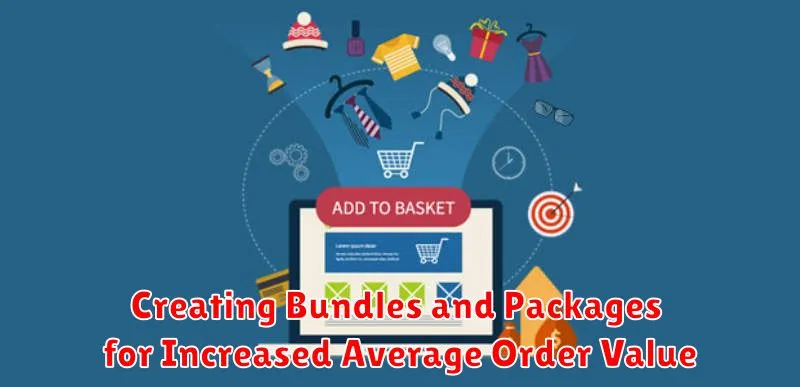
Bundling and packaging products is a powerful strategy to boost your average order value. By offering complementary items together at a discounted price, you incentivize customers to purchase more, ultimately increasing their overall spend.
Creating effective bundles requires careful consideration. Start by identifying products that naturally complement each other. For example, a camera could be bundled with a lens, memory card, and carrying case. A gaming console could be packaged with extra controllers and popular games.
The key is to offer a perceived value greater than the sum of the individual product prices. This doesn’t necessarily mean the discount needs to be substantial; even a small perceived saving can be enough to encourage customers to opt for the bundle.
Clearly communicate the bundle’s value proposition. Highlight the combined benefits and the savings customers receive. Make it easy for customers to understand why purchasing the bundle is a better deal than buying the items separately.
Implementing Personalized Recommendations Based on Customer Behavior
Personalized recommendations are the cornerstone of effective upselling and cross-selling. By leveraging customer data, you can tailor product suggestions to individual preferences, significantly increasing conversion rates.
Analyzing past purchase history is a powerful starting point. If a customer previously bought running shoes, recommending running socks or athletic apparel is a logical and effective upsell or cross-sell opportunity.
Browsing behavior offers valuable insights into current customer interests. Tracking viewed products, even if not purchased, allows you to suggest related items or premium versions. For instance, if a customer spends time viewing budget laptops, recommending a slightly more expensive model with enhanced features can be persuasive.
Demographic data, such as age and location, can further refine recommendations. Offering age-appropriate products or items relevant to a customer’s climate enhances personalization. Combining these data points paints a comprehensive picture of customer needs and desires, allowing you to present truly relevant product suggestions.
Leveraging Scarcity and Urgency to Encourage Purchases
Creating a sense of scarcity and urgency can significantly impact customer behavior and encourage purchases. By highlighting limited availability or time-sensitive offers, you can motivate customers to act quickly.
Scarcity tactics focus on the limited quantity of a product. Phrases like “limited edition,” “only a few left,” or “while supplies last” can create a sense of exclusivity and drive demand. Displaying low stock numbers can also be an effective way to convey scarcity.
Urgency, on the other hand, emphasizes a limited timeframe. Techniques like flash sales, limited-time discounts, or countdown timers can create a sense of immediacy and encourage customers to purchase before the opportunity is gone. Using phrases such as “sale ends soon” or “offer expires in 24 hours” can further reinforce the urgency.
It’s important to use these tactics ethically and avoid creating false scarcity or urgency. Customers appreciate transparency and honesty. Authenticity builds trust and fosters long-term relationships.
Training Your Sales Team to Effectively Upsell and Cross-sell
Equipping your sales team with the right skills is crucial for successful upselling and cross-selling. A comprehensive training program should cover several key areas.
First, focus on product knowledge. Sales representatives must thoroughly understand the features and benefits of all products, enabling them to identify appropriate upsell and cross-sell opportunities. This includes knowing which products complement each other and which offer enhanced features or value.
Next, emphasize needs-based selling. Train your team to actively listen to customer needs and tailor their recommendations accordingly. Upselling and cross-selling shouldn’t feel pushy; instead, it should feel like offering helpful solutions. Role-playing exercises can be beneficial for practicing these techniques.
Finally, provide clear guidelines on pricing and promotions. Sales representatives should be well-versed in current offers and be able to clearly explain the value proposition of the upsell or cross-sell. Transparent communication builds trust and encourages customer acceptance.
Measuring the Success of Your Upselling and Cross-selling Efforts
Tracking the performance of your upselling and cross-selling strategies is crucial for continuous improvement. Key Performance Indicators (KPIs) offer valuable insights into the effectiveness of your efforts.
Monitor your average order value (AOV). A successful upselling/cross-selling strategy should increase this metric. Track the upsell/cross-sell conversion rate. This measures how often customers accept additional offers. A higher rate signifies effective techniques and appealing offers.
Product-specific data is also valuable. Analyze which items are most frequently upsold or cross-sold. This helps identify product affinities and optimize recommendations. Customer segmentation analysis can reveal which customer groups respond best to upselling and cross-selling, allowing for more targeted campaigns.
Regularly review these KPIs to identify areas for improvement. Are certain products underperforming in upsell attempts? Is the cross-sell conversion rate low for a specific customer segment? These insights guide refinement and optimization for maximizing sales growth.
