

Want to boost sales and create a sense of urgency that drives conversions? Flash sales are a powerful tool for achieving rapid revenue growth and clearing out inventory. This comprehensive guide will delve into the strategies and tactics necessary to run successful flash sales that capture customer attention and generate impressive results. From planning and execution to post-sale analysis, you’ll learn how to leverage flash sales effectively to maximize profit and build brand excitement.
Whether you’re an experienced e-commerce retailer or just starting out, understanding the nuances of a well-executed flash sale is crucial. This guide covers everything from choosing the right flash sale platform and setting optimal pricing strategies to crafting compelling marketing messages that create FOMO (Fear of Missing Out). Discover how to leverage social media, email marketing, and other channels to reach your target audience and drive traffic to your flash sale. Learn how to avoid common pitfalls and optimize your flash sale strategy for long-term success.
Defining Your Flash Sale Objectives and Target Audience
Before launching a flash sale, clearly define your objectives. What do you hope to achieve? Is it increased sales volume, boosting brand awareness, clearing out excess inventory, or attracting new customers? A well-defined objective will guide your strategy and help measure the success of your sale.
Equally important is identifying your target audience. Understanding their needs, preferences, and buying behaviors is crucial for tailoring your flash sale to resonate with them. Consider factors such as demographics, purchasing history, and online activity. A focused approach ensures your message reaches the right people, maximizing the impact of your flash sale.
Defining your target audience helps you choose the right products, set appropriate discounts, and select the most effective promotional channels. By aligning your flash sale with the specific interests of your target audience, you increase the likelihood of achieving your objectives.
Choosing the Right Products for Your Flash Sale
Product selection is crucial for a successful flash sale. The right items will attract your target audience and drive conversions. Consider several factors when choosing your flash sale inventory.
Overstocked items are excellent candidates for flash sales. This helps clear out warehouse space and generate revenue from slow-moving inventory.
Seasonal products nearing the end of their season can be offered at a steep discount to boost sales before they become obsolete.
Popular products can create excitement and draw a larger audience to your sale. Offering a limited-time discount on a sought-after item can create a significant buzz.
New product introductions can benefit from a flash sale by generating initial interest and driving early adoption. This can create momentum for long-term sales.
Finally, consider offering exclusive bundles or packages specifically for the flash sale. These unique offerings can incentivize purchases and increase average order value.
Setting the Perfect Price and Discount Strategy

A compelling price and discount strategy is crucial for a successful flash sale. Profitability shouldn’t be sacrificed for deep discounts. Carefully analyze your costs, including marketing expenses, to determine a discount that attracts customers while maintaining a healthy profit margin.
Consider different discount structures. A percentage discount (e.g., 20% off) is easy to understand and calculate. Fixed-price discounts (e.g., $10 off) work well for higher-priced items. Tiered discounts (e.g., spend $50, get 15% off; spend $100, get 25% off) can encourage larger purchases.
Free shipping can be a powerful incentive, especially for lower-priced items. Factor shipping costs into your overall pricing strategy.
Compare your discounted prices with competitors to ensure your offer is truly enticing. Highlight the original price alongside the discounted price to emphasize the savings.
Creating a Sense of Urgency and Excitement
A key ingredient to a successful flash sale is the creation of urgency and excitement. Customers need to feel compelled to act quickly, lest they miss out on a great deal. This sense of urgency drives immediate purchases and boosts conversion rates.
Limited-time offers are the cornerstone of this strategy. Clearly communicate the start and end times of your sale. A visible countdown timer on your website can further emphasize the limited-time nature of the offer.
Scarcity tactics also contribute to the sense of urgency. Highlighting limited quantities, using phrases like “while supplies last,” or displaying low stock warnings can encourage immediate action. Be truthful about availability to maintain customer trust.
Finally, build excitement through compelling messaging and visuals. Use vibrant language that emphasizes the exclusivity and value of the offer. Showcase the discounted products in an attractive and engaging manner.
Promoting Your Flash Sale Across Multiple Channels
Promoting your flash sale effectively is crucial for maximizing its impact. A multi-channel approach ensures you reach the widest possible audience. Consider these key avenues:
Email Marketing
Email remains a powerful tool. Segment your list to target specific customer groups with tailored messaging. Clearly highlight the sale’s duration and benefits.
Social Media Promotion
Leverage the power of social media platforms. Create engaging posts with compelling visuals and countdown timers to build anticipation. Use relevant hashtags to expand your reach.
Website Banners and Pop-ups
Utilize your website as a primary promotional platform. Place eye-catching banners and pop-ups to immediately alert visitors about the flash sale.
Paid Advertising
Consider using paid advertising channels like search engine marketing and social media ads to target new potential customers and reinforce your message to existing ones.
Influencer Marketing
Partnering with influencers can help spread the word about your sale to a wider audience, especially if they align with your target demographic.
Managing Inventory and Logistics Effectively
Effective inventory management is crucial for a successful flash sale. Accurately forecasting demand helps prevent stockouts, which can lead to customer dissatisfaction. Overstocking, on the other hand, ties up capital and can lead to losses if the excess inventory doesn’t sell.
Start by analyzing past sales data and current market trends to estimate demand for the flash sale items. Consider offering a limited quantity of highly desirable products to create a sense of urgency. Clear communication with your suppliers is essential to ensure they can meet the anticipated demand spike. Establish a reliable system for tracking inventory levels in real-time throughout the sale.
Logistics are equally important. Optimize your order fulfillment process to handle the increased volume of orders quickly and efficiently. Ensure you have adequate staffing for picking, packing, and shipping. Partnering with a reliable shipping provider and clearly communicating shipping times to customers can minimize delays and manage expectations. Offering various shipping options can also enhance the customer experience.
Analyzing the Results of Your Flash Sale and Making Improvements
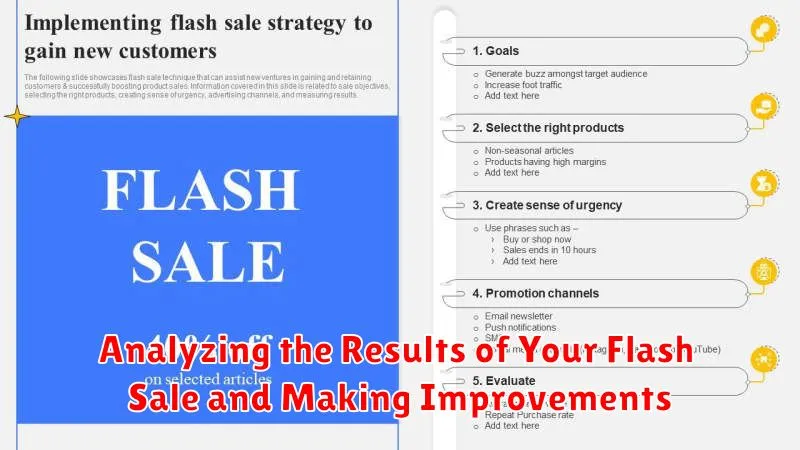
After the excitement of your flash sale subsides, the crucial task of analysis begins. Evaluating key metrics provides invaluable insights for future sales. Start by examining your overall revenue generated during the sale period. Compare this against your projected revenue to understand performance.
Website traffic is another important factor. Analyze the number of visitors, their sources, and how they interacted with your site. A high bounce rate may indicate issues with site navigation or product presentation.
Conversion rate, the percentage of visitors who made a purchase, is a key indicator of sale effectiveness. A low conversion rate suggests potential problems with pricing, product selection, or the checkout process.
Finally, assess your inventory management. Identify any overstocked or understocked items. This information is crucial for optimizing future inventory levels and minimizing losses.
By analyzing these metrics, you can identify areas for improvement and refine your strategies for even more successful flash sales in the future.
Tips for Maximizing Conversions During a Flash Sale
Create a Sense of Urgency. Highlight the limited-time nature of the sale. Use countdown timers and phrases like “while supplies last” to encourage immediate action.
Offer Irresistible Deals. Deep discounts or exclusive bundles are key to attracting customers. Ensure the perceived value is high to justify the purchase.
Simplify the Checkout Process. A streamlined checkout experience is crucial. Minimize required fields and offer guest checkout options to reduce friction.
Optimize for Mobile Devices. Ensure your website is fully responsive and loads quickly on all devices, as a significant portion of flash sale traffic comes from mobile users.
Leverage Social Proof. Displaying customer testimonials, reviews, or the number of items sold can build trust and encourage conversions.
