
Buy Now, Pay Later (BNPL) has rapidly transformed the landscape of consumer finance, offering a seemingly attractive alternative to traditional credit cards and loans. This comprehensive guide delves into the mechanics of BNPL, exploring how these short-term financing options work, from application to repayment. We will examine the various BNPL providers, the types of purchases typically financed through these platforms, and the potential benefits and drawbacks for consumers who choose this increasingly popular payment method. Understanding the nuances of BNPL is crucial for navigating the modern financial landscape.
This guide will equip you with the knowledge to make informed decisions about using Buy Now, Pay Later services. We’ll analyze the impact of BNPL on personal finances, considering factors such as credit scores, budgeting, and potential debt accumulation. Furthermore, we’ll discuss the broader economic implications of this rapidly growing sector, including its regulatory landscape and the role of BNPL providers in shaping consumer spending habits. Whether you are a seasoned online shopper or simply curious about this emerging financial trend, this comprehensive guide will decode the intricacies of Buy Now, Pay Later.
Understanding the Basics of BNPL
Buy Now, Pay Later (BNPL) is a short-term financing option that allows consumers to make purchases and pay for them in installments. It’s essentially a point-of-sale loan that often comes with no interest if payments are made on time. BNPL services integrate with online and in-store checkouts, offering a seamless alternative to traditional credit cards or layaway plans.
These services appeal to consumers by offering instant approval and flexible payment options, typically spread over a few weeks or months. The convenience and accessibility of BNPL have contributed to its rapid growth in popularity, especially among younger shoppers.
BNPL providers partner with merchants to offer this payment method, and they typically make money by charging merchants a transaction fee. The risk of non-payment is generally assumed by the BNPL provider, incentivizing them to conduct basic credit checks on consumers during the application process.
How Buy Now, Pay Later Works: A Step-by-Step Guide
The BNPL process is generally straightforward and occurs at the point of sale.
-
Choose BNPL at Checkout: When completing an online or in-store purchase, select the BNPL option as your payment method.
-
Quick Application: You’ll be prompted to complete a brief application, typically requiring basic personal and financial information. This usually involves a soft credit check which doesn’t impact your credit score.
-
Instant Approval (Usually): Most BNPL providers offer near-instant approval decisions.
-
Down Payment (Sometimes): Some BNPL services require a small down payment at the time of purchase, usually around 25% of the total.
-
Payment Schedule: The remaining balance is split into equal installments, often paid bi-weekly or monthly, over a predetermined period. The schedule is outlined upfront.
-
Automatic Payments: Payments are typically automatically deducted from your linked debit card, credit card, or bank account.
The Benefits of Using BNPL Services for Shoppers
Buy Now, Pay Later (BNPL) offers several advantages for consumers. Increased affordability is a key benefit, allowing shoppers to purchase items they might not otherwise be able to afford upfront by spreading the cost into smaller, manageable installments.
Budgeting flexibility is another advantage. BNPL can help consumers manage their finances by providing predictable payment schedules. This can be especially helpful for larger purchases.
The convenience of BNPL services is also appealing. The quick and easy application process often eliminates the need for extensive credit checks, making it a faster alternative to traditional credit options.
Finally, some BNPL providers offer interest-free periods. This allows shoppers to avoid interest charges if they pay off their balance within the specified timeframe, effectively providing a short-term, no-cost credit solution.
The Potential Drawbacks of BNPL
While BNPL offers enticing conveniences, it’s crucial to be aware of the potential downsides. Overspending is a significant risk. The ease of purchase can lead to accumulating more debt than initially anticipated, especially with multiple BNPL arrangements.
Hidden fees can also diminish the perceived savings. Late payment fees, while often advertised as minimal, can quickly add up. Some providers also charge interest, effectively negating the interest-free benefit if not paid off within the promotional period.
Credit score impact is another important consideration. While some BNPL providers don’t report to credit bureaus, missed or late payments with those that do can negatively affect your credit history. Additionally, multiple BNPL applications might be perceived by lenders as a sign of financial instability, potentially impacting future loan approvals.
BNPL and Its Impact on Businesses
Buy Now, Pay Later (BNPL) services have significantly impacted businesses, presenting both opportunities and challenges. Increased sales are a key advantage, as BNPL can reduce purchase friction and attract customers who might otherwise hesitate due to upfront costs. This can lead to a larger average order value as shoppers are more likely to add items to their cart.
However, businesses must also consider the fees associated with BNPL services. These fees can cut into profit margins and need to be factored into pricing strategies. Furthermore, while BNPL providers typically handle the collection process, businesses should be aware of the potential for increased customer service inquiries related to payment plans and potential disputes. Understanding these dynamics is crucial for businesses to effectively integrate BNPL and maximize its potential benefits.
Regulations and Consumer Protection in the BNPL Landscape
The rapid growth of Buy Now, Pay Later (BNPL) has prompted increased scrutiny from regulators focused on consumer protection. Currently, BNPL services often fall outside traditional credit regulations, leading to concerns about potential risks for consumers.
Key regulatory discussions revolve around credit reporting, debt collection practices, and disclosure requirements. The lack of consistent reporting to credit bureaus can make it difficult for consumers to accurately assess their debt levels and can impact their credit scores. Similarly, inconsistent debt collection practices can lead to confusion and potential harm for consumers struggling to repay.
Regulators are exploring ways to address these concerns. Some proposals include treating BNPL services like traditional credit products, mandating reporting to credit bureaus, and establishing clearer rules for debt collection. Increased transparency and consumer education initiatives are also crucial for empowering informed decision-making.
The Future of Buy Now, Pay Later
The BNPL landscape is constantly evolving, driven by technological advancements and shifting consumer behavior. Several key trends are likely to shape the future of this financing method.
Increased Regulation is anticipated as BNPL services gain wider adoption. This will likely focus on consumer protection, ensuring responsible lending practices, and clear disclosure of terms and fees. Standardization across different providers is also a possibility.
Integration with Existing Financial Systems is another likely development. We may see closer ties between BNPL platforms and traditional credit scoring systems, impacting credit reports and lending decisions more directly.
Expansion into New Markets and Product Categories is expected. BNPL financing could extend beyond traditional retail purchases to include larger ticket items, such as healthcare, education, and even real estate.
Technological innovation will continue to drive the evolution of BNPL. This includes the development of more sophisticated risk assessment tools, personalized payment plans, and seamless integration with mobile wallets and other digital payment platforms.
Choosing the Right BNPL Option for Your Needs
Navigating the BNPL landscape requires careful consideration of your individual financial situation and spending habits. The right BNPL option depends on several key factors.
Purchase Amount and Repayment Schedule
Consider the total cost of your purchase and how comfortable you are with the proposed repayment schedule. Shorter-term plans typically involve higher payments, while longer-term plans may accrue more interest if applicable.
Fees and Interest
Carefully review the fee structure. Some providers charge late fees, while others may charge interest, especially on longer-term plans. Understanding the potential costs associated with missed payments is crucial.
Credit Impact
While some BNPL services don’t perform hard credit checks, late or missed payments can still negatively impact your credit score. Choose a plan you’re confident you can manage responsibly.
Merchant Acceptance
Different BNPL providers partner with different retailers. Ensure your chosen service is accepted where you intend to shop.
Real-World Examples of Buy Now, Pay Later in Action
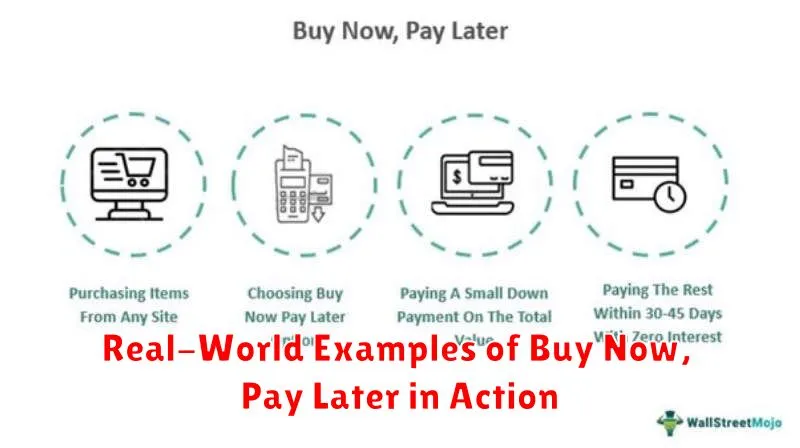
Scenario 1: Furniture Purchase. Imagine purchasing a new sofa costing $1,000. Instead of paying the full amount upfront, a BNPL service allows you to split the cost into four interest-free payments of $250, typically due every two weeks. This makes a larger purchase more manageable with smaller, budgeted payments.
Scenario 2: Emergency Car Repair. An unexpected car repair bill of $500 can strain a budget. BNPL can cover the cost immediately, dividing it into several smaller installments, allowing you to address the emergency without financial strain.
Scenario 3: Online Shopping. Many online retailers integrate BNPL services at checkout. A $100 clothing purchase could be split into four $25 payments, making it easier to spread the cost of smaller, everyday purchases.
