
In today’s competitive digital landscape, a high-converting e-commerce funnel is crucial for online business success. This step-by-step guide provides a comprehensive framework for building a robust e-commerce funnel that drives conversions and maximizes sales. We’ll delve into the key stages of a successful funnel, from attracting potential customers to nurturing them towards making a purchase and becoming loyal advocates for your brand. Learn how to optimize each stage of the e-commerce funnel, leverage effective marketing strategies, and ultimately increase your bottom line. Whether you’re a seasoned e-commerce entrepreneur or just starting out, this guide offers invaluable insights to enhance your online sales performance.
This guide will cover key aspects of building a high-converting e-commerce funnel, including attracting traffic, capturing leads, nurturing prospects, closing sales, and building customer loyalty. We will explore proven tactics for each stage, such as search engine optimization (SEO), social media marketing, email marketing, and conversion rate optimization (CRO). By implementing these strategies, you can create a seamless and effective customer journey that transforms visitors into loyal, paying customers, boosting your e-commerce revenue and achieving sustainable growth.
What is an E-Commerce Funnel?
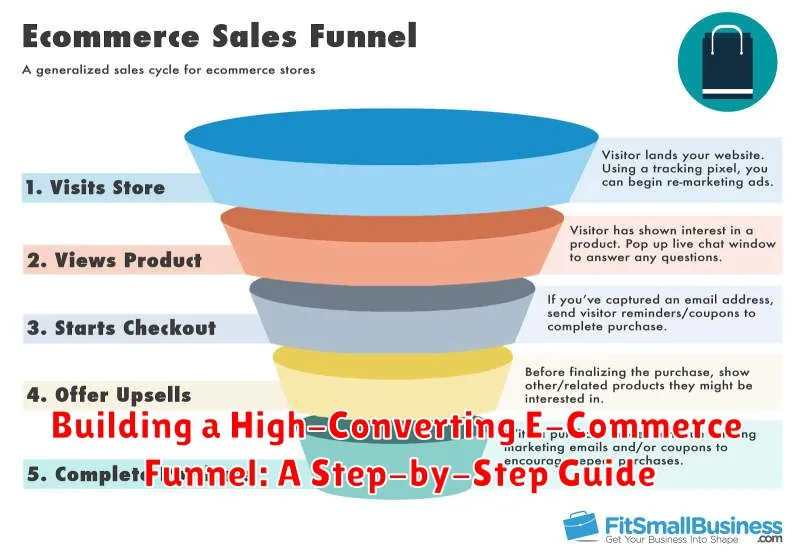
An e-commerce funnel is a visual representation of the customer journey toward purchasing a product or service online. It describes the various stages a potential customer goes through, from initial awareness to final purchase. Think of it as a funnel because a large number of potential customers enter at the top, and as they progress through the stages, the number narrows down, leading to a smaller number of actual conversions.
The e-commerce funnel helps businesses understand customer behavior at each stage. This understanding is crucial for optimizing the customer experience and improving conversion rates. By analyzing each stage, businesses can identify potential roadblocks and implement strategies to guide more customers towards a purchase.
The goal of a well-designed e-commerce funnel is to minimize drop-offs at each stage and maximize the number of customers who reach the final purchase stage. This involves creating targeted marketing campaigns, providing relevant content, and streamlining the checkout process.
Understanding the Stages of a Typical E-Commerce Funnel
A typical e-commerce funnel consists of several key stages, each representing a step closer to a completed purchase. Understanding these stages allows businesses to tailor their strategies and optimize the customer journey.
The first stage is Awareness. At this point, potential customers become aware of your brand or products, perhaps through advertising, social media, or organic search.
Next is the Interest stage. Here, customers begin to actively research your offerings, comparing products and reading reviews. Engaging content and compelling visuals are crucial at this point.
The Desire stage follows, where customers express a stronger intent to purchase. Personalized recommendations and targeted promotions can help solidify their interest.
Finally, the Action stage is where the actual purchase takes place. A seamless checkout process and multiple payment options are essential to converting desire into a sale.
Key Elements of a Successful E-Commerce Funnel
Several key elements contribute to a high-converting e-commerce funnel. A compelling value proposition is crucial, clearly communicating the benefits of your products or services to attract potential customers. This should be evident throughout the entire funnel.
User experience (UX) plays a vital role. A seamless and intuitive browsing experience, including easy navigation, a mobile-friendly design, and a fast loading speed, encourages visitors to stay and explore. A clunky or confusing interface can lead to high bounce rates and abandoned carts.
Targeted traffic is essential. Attracting the right audience—individuals genuinely interested in your offerings—increases the likelihood of conversions. This can be achieved through various marketing strategies, including search engine optimization (SEO), social media marketing, and paid advertising.
Clear calls to action (CTAs) guide visitors towards the desired action, whether it’s adding an item to their cart, signing up for a newsletter, or completing a purchase. Strong CTAs are concise, action-oriented, and strategically placed throughout the funnel.
Finally, trust and security are paramount. Displaying security badges, offering secure payment options, and providing transparent privacy policies builds customer confidence and encourages conversions.
Strategies for Building a High-Converting E-Commerce Funnel
Building a high-converting e-commerce funnel requires a strategic approach focused on attracting, engaging, and converting customers. Here are some key strategies:
Target the Right Audience
Effective targeting is crucial. Define your ideal customer profile to tailor your messaging and offers, ensuring you reach the most receptive audience.
Optimize for Mobile
A mobile-first approach is essential. Ensure your funnel is seamless and user-friendly on all mobile devices, providing a positive experience for on-the-go shoppers.
Use Compelling Content
Create high-quality content that resonates with your target audience. Showcase product benefits, address customer pain points, and build trust throughout the funnel.
Leverage Social Proof
Incorporate customer testimonials, reviews, and social media engagement to build credibility and encourage conversions. Positive social proof can significantly influence purchasing decisions.
Optimizing Your E-Commerce Funnel for Each Stage
Optimizing each stage of your e-commerce funnel is crucial for maximizing conversions. This involves tailoring strategies to the specific needs and behaviors of customers at each point in their journey.
Awareness Stage Optimization
Focus on capturing attention and generating interest. Content marketing, search engine optimization (SEO), and social media marketing are key tactics here. Clearly communicate your value proposition and establish your brand as a trusted resource.
Interest Stage Optimization
Once interest is piqued, nurture leads with valuable content. Offer lead magnets like ebooks or webinars in exchange for contact information. Personalized email campaigns can further engage potential customers and guide them towards the next stage.
Decision Stage Optimization
At this stage, customers are actively considering a purchase. Product demonstrations, customer testimonials, and clear pricing information can help solidify their decision. Address any potential objections and highlight the benefits of choosing your product or service.
Action Stage Optimization
Make the purchasing process as seamless as possible. Optimize your checkout process for speed and simplicity. Offer various payment options and provide clear shipping information. A well-designed website and mobile-friendly experience are essential.
Tools and Technologies for E-Commerce Funnel Building
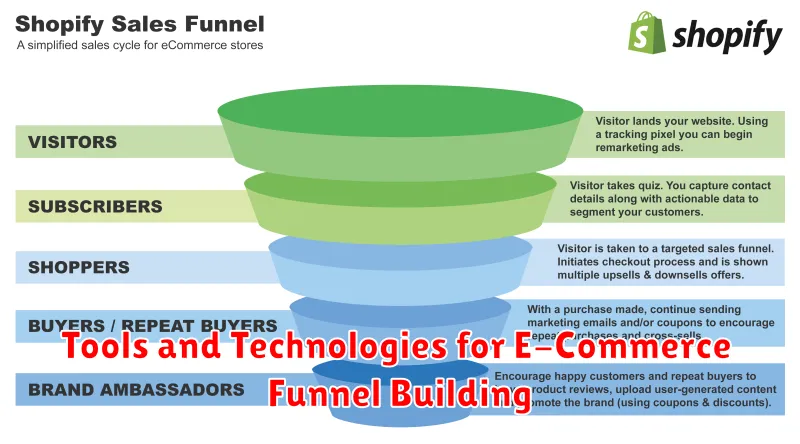
Building a high-converting e-commerce funnel requires the right set of tools and technologies. Selecting the appropriate platforms can significantly impact your success.
E-commerce Platforms: Choosing the right platform is crucial. Platforms like Shopify, WooCommerce, and BigCommerce provide the foundation for your online store and integrate with various other tools.
Landing Page Builders: Tools like Leadpages, Instapage, and Unbounce allow for the creation of optimized landing pages designed to capture leads and drive conversions. These tools often offer A/B testing capabilities for continuous improvement.
Email Marketing Services: Email marketing remains a powerful tool for nurturing leads and driving sales. Platforms like Mailchimp, Klaviyo, and Constant Contact offer automation, segmentation, and analytics to maximize your email marketing efforts.
Analytics Platforms: Tracking and analyzing data is essential. Google Analytics and other analytics platforms provide insights into user behavior, allowing you to identify areas for improvement within your funnel.
Analyzing and Measuring the Performance of Your Funnel
Analyzing your e-commerce funnel’s performance is crucial for optimization and increased conversions. This involves tracking key metrics at each stage to identify bottlenecks and areas for improvement.
Key Performance Indicators (KPIs) to monitor include:
- Conversion Rate: The percentage of visitors who complete a desired action at each stage (e.g., adding to cart, completing purchase).
- Cart Abandonment Rate: The percentage of shoppers who add items to their cart but leave without purchasing.
- Average Order Value (AOV): The average amount spent per order.
- Customer Lifetime Value (CLTV): The predicted total revenue a customer will generate throughout their relationship with your business.
Utilize analytics platforms like Google Analytics or specialized e-commerce analytics tools to gather this data. Regularly review these metrics to understand how users interact with your funnel and identify areas for improvement. For instance, a high cart abandonment rate may indicate issues with shipping costs or complex checkout processes.
A/B testing different versions of your funnel elements (e.g., headlines, call-to-actions, checkout forms) allows you to identify what resonates best with your audience and drives conversions.
Common Mistakes to Avoid in E-Commerce Funnel Creation
Creating a high-converting e-commerce funnel requires careful planning and execution. Avoiding common pitfalls can significantly impact your success. Here are some key mistakes to steer clear of:
Ignoring Mobile Optimization
A significant portion of online traffic comes from mobile devices. Failing to optimize your funnel for mobile users leads to lost conversions. Ensure your site is responsive and provides a seamless experience across all devices.
Complicated Checkout Process
A lengthy or confusing checkout process can deter customers from completing their purchase. Simplify the steps, minimize required fields, and offer various payment options.
Lack of Clear Call to Actions
Clear and compelling call-to-actions (CTAs) are essential for guiding customers through the funnel. Use strong verbs and make it obvious what action you want users to take.
Neglecting Customer Service
Providing excellent customer service is crucial throughout the funnel. Offer readily available support channels to address customer queries and resolve issues promptly.
Case Studies of Effective E-Commerce Funnels
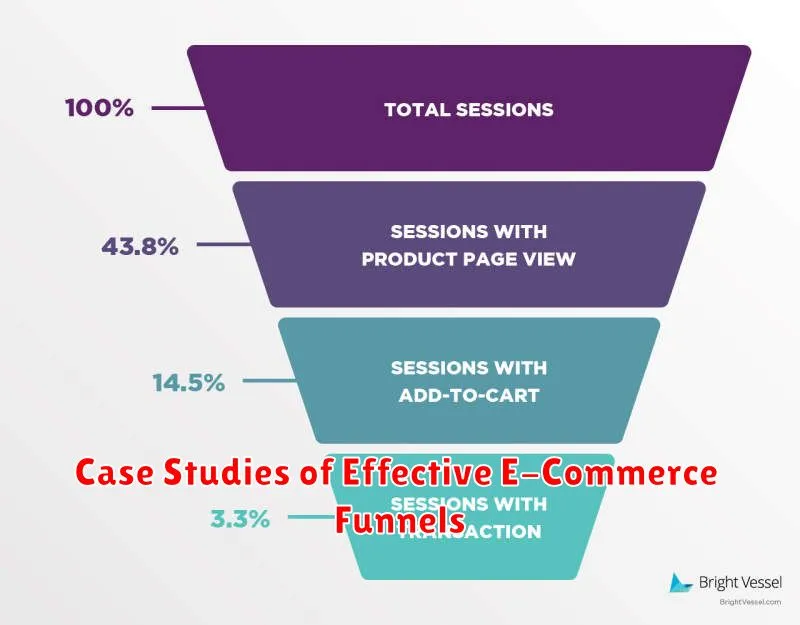
Examining successful e-commerce funnels provides valuable insights for optimizing your own strategy. Here are a few brief examples:
Case Study 1: Subscription Box Service
A beauty subscription box service leveraged a quiz funnel to personalize product recommendations. By gathering data on skin type, hair color, and style preferences, the company increased conversion rates by 15% due to highly targeted offerings. This demonstrates the power of personalization in driving sales.
Case Study 2: High-End Fashion Retailer
A luxury fashion retailer implemented a retargeting campaign within their funnel. Abandoned cart emails featuring personalized styling suggestions and limited-time discounts resulted in a 10% recovery rate for lost sales. This highlights the effectiveness of re-engaging potential customers.
Case Study 3: Electronics Store
An electronics store optimized their checkout process by simplifying form fields and offering multiple payment options. This streamlining of the purchasing process resulted in a 5% decrease in cart abandonment and a noticeable increase in completed transactions. This exemplifies the importance of a frictionless checkout experience.
