
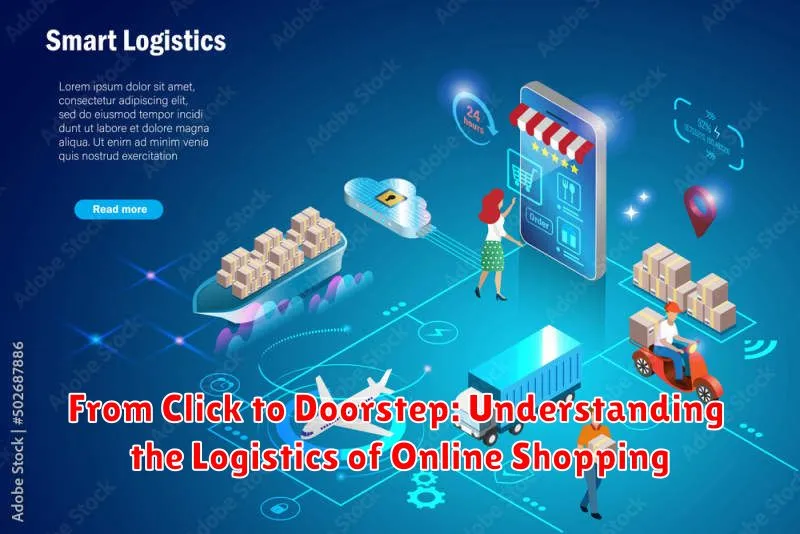
In today’s digital age, the convenience of online shopping has revolutionized how we acquire goods and services. From the comfort of our homes, we can browse through a vast selection of products, compare prices, and make purchases with a few clicks. However, behind this seamless experience lies a complex network of operations known as logistics. Understanding the intricate processes involved, from the moment you click “buy” to the final delivery at your doorstep, provides valuable insight into the efficiency and sophistication of modern e-commerce.
This article delves into the fascinating world of online shopping logistics, exploring the journey of a product from warehouse to doorstep. We’ll examine the key components that ensure timely and efficient delivery, including warehouse management, order fulfillment, shipping, and last-mile delivery. By understanding these crucial stages, we can appreciate the complex orchestration required to bring the world of online shopping to our fingertips. We will analyze the roles played by various stakeholders in the supply chain, as well as the challenges and innovations that shape the future of this ever-evolving industry. From click to doorstep, this article will unravel the mysteries behind the logistics that power our online shopping experiences.
The Order Fulfillment Process
The order fulfillment process encompasses the steps involved in receiving, processing, and delivering an order to the customer. It begins when a customer clicks the “buy” button and ends when the package arrives at their doorstep. This intricate process is crucial for customer satisfaction and involves several key stages.
Order Placement: This marks the initiation of the process. The customer selects the desired items, enters shipping information, and confirms the order.
Order Processing: This stage involves verifying payment, confirming inventory availability, and generating the necessary documentation for fulfillment.
Picking and Packing: Warehouse staff locate and retrieve the ordered items (picking) and then package them securely for shipment (packing).
Shipping: The packaged order is handed off to a shipping carrier for delivery. This stage includes selecting the appropriate shipping method and generating tracking information.
Delivery: The final step in the process involves the carrier transporting the package to the customer’s designated delivery address.
Inventory Management in Online Retail
Effective inventory management is crucial for the success of any online retail business. It involves striking a delicate balance between meeting customer demand and minimizing storage costs. Holding too much inventory ties up capital and risks obsolescence, while insufficient inventory leads to stockouts and lost sales.
Several key aspects contribute to successful inventory management. Demand forecasting utilizes historical sales data, trends, and seasonality to predict future demand. Real-time inventory tracking provides accurate visibility into stock levels across all locations, enabling informed decisions. Automated replenishment systems streamline the ordering process, ensuring timely restocking.
Strategies like ABC analysis categorize inventory based on value and demand, allowing for prioritized management. Just-in-time (JIT) inventory minimizes storage costs by receiving goods only as needed. Safety stock acts as a buffer against unforeseen demand fluctuations or supply chain disruptions. These methods help online retailers maintain optimal inventory levels and improve overall operational efficiency.
Warehouse and Distribution Center Operations
Warehouses and distribution centers play a crucial role in online retail logistics. They serve as central hubs for receiving, storing, processing, and shipping products. Efficient operations within these facilities are essential for timely order fulfillment.
Key processes within a warehouse or distribution center include receiving incoming inventory, putaway (organizing and storing goods), picking and packing orders, and shipping. These facilities often utilize sophisticated Warehouse Management Systems (WMS) to manage and track inventory levels, storage locations, and order progress.
The layout and design of a warehouse or distribution center are optimized for efficiency. Strategies like cross-docking (transferring goods directly from receiving to shipping) and zone picking (assigning workers to specific areas) help minimize processing time.
Shipping and Delivery Methods
A key aspect of online shopping lies in the variety of shipping and delivery methods available to customers. Shipping speed and cost are primary factors influencing a customer’s choice.
Standard shipping typically takes several business days and is the most economical option. Expedited shipping, including options like two-day or overnight delivery, comes at a premium but offers faster delivery times. Same-day delivery is becoming increasingly popular in metropolitan areas for specific items and retailers.
Delivery options also vary. Home delivery is the most common, with packages delivered directly to the customer’s residence. Pick-up locations, such as retail stores, lockers, or designated access points, provide an alternative for customers who may not be available for home delivery or prefer greater control over package retrieval. Curbside pickup allows customers to collect orders without leaving their vehicles.
The choice of carrier plays a significant role. Major carriers include national postal services and private courier companies. The specific carrier employed often depends on the retailer, the shipping method selected, and the delivery destination.
Returns and Reverse Logistics
Reverse logistics encompasses the processes involved in handling returned goods and managing their flow back through the supply chain. A streamlined returns process is crucial for customer satisfaction and efficient inventory management.
Customers may return items for various reasons, including incorrect sizing, damage during shipping, or simply changing their minds. Effective reverse logistics requires a clear return policy, easy-to-use return labels, and multiple return options (e.g., mail, drop-off locations).
Once returned, items undergo an inspection process to determine their condition. They may be restocked, refurbished, liquidated, or disposed of, depending on their state and company policy. Managing these different outcomes efficiently minimizes losses and optimizes inventory levels.
Challenges in reverse logistics include the cost of processing returns, managing inventory visibility across various locations, and the complexity of dealing with different product types and return reasons. Optimizing these processes can lead to significant cost savings and improved customer retention.
The Role of Technology in Online Shopping Logistics
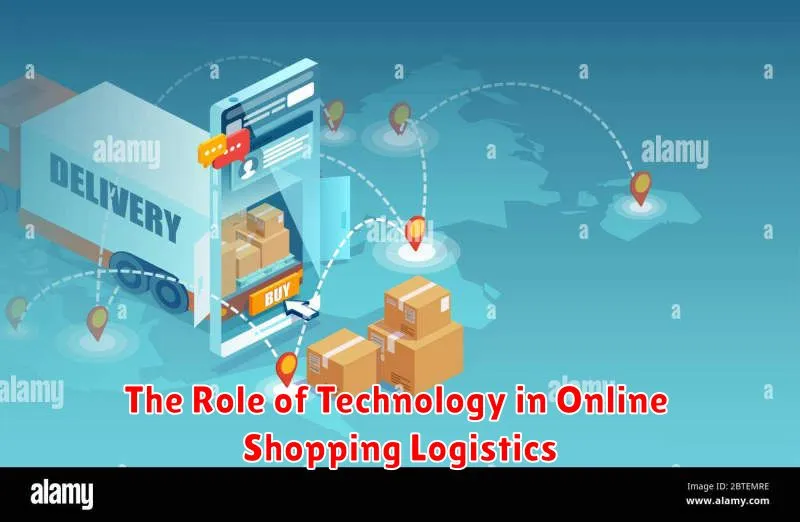
Technology plays a crucial role in enabling the complex systems behind online shopping logistics. From the moment a customer clicks “buy” to the final doorstep delivery, technology orchestrates the entire process. Inventory management systems track product availability in real-time, ensuring accurate stock information is displayed to customers.
Warehouse management systems (WMS) optimize storage and picking processes within fulfillment centers, directing workers efficiently to locate and package orders. Transportation management systems (TMS) select the most efficient shipping routes and carriers, factoring in cost and delivery time. These interconnected systems communicate seamlessly, updating order status and tracking information throughout the journey.
Furthermore, data analytics plays a vital role in optimizing logistics operations. By analyzing sales trends, customer preferences, and delivery performance, businesses can make data-driven decisions to improve efficiency and reduce costs. For example, predictive analytics can forecast demand, enabling companies to pre-position inventory closer to customers and minimize shipping times.
Challenges and Solutions in E-Commerce Logistics
E-commerce logistics faces a unique set of challenges. Inventory management is crucial, balancing sufficient stock to meet demand without excess storage costs. Accurate demand forecasting helps mitigate this, utilizing data analysis to predict buying trends.
Last-mile delivery presents a significant hurdle. Delivering individual packages to diverse locations efficiently and cost-effectively is complex. Solutions include leveraging local delivery networks and optimizing delivery routes using sophisticated software. Furthermore, managing returns effectively is another challenge, demanding streamlined processes and clear policies to ensure customer satisfaction.
Warehouse efficiency is paramount. Streamlining operations within the warehouse, from receiving inventory to order fulfillment, is essential for fast processing times. Automation technologies like robotic systems and automated guided vehicles (AGVs) offer solutions to increase throughput and reduce manual labor costs.
Optimizing Logistics for Customer Satisfaction
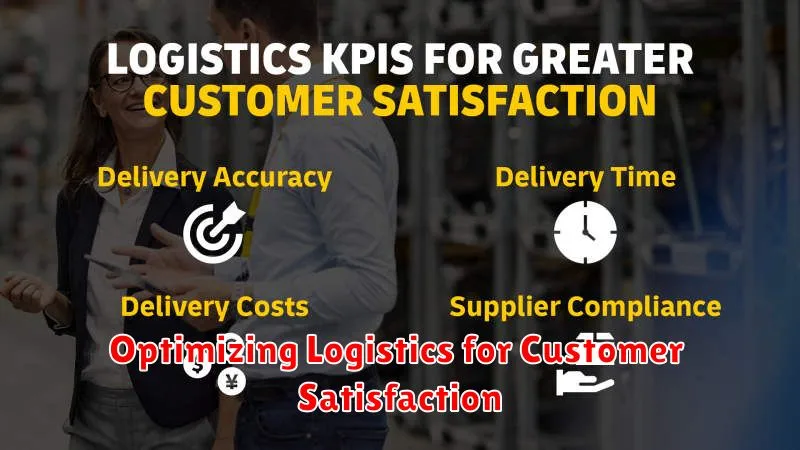
In the competitive landscape of e-commerce, optimizing logistics plays a crucial role in ensuring customer satisfaction. Fast and reliable delivery is paramount. Customers expect transparent tracking information and flexible delivery options. Meeting these expectations builds trust and fosters loyalty.
Key strategies for optimizing logistics include streamlining warehouse operations for efficient order fulfillment. This involves strategically locating inventory and implementing automated processes. Choosing the right shipping partners is also vital. Different carriers offer various service levels and pricing. Selecting the optimal partner for each order ensures efficient and cost-effective delivery.
Offering flexible delivery options like scheduled delivery windows and alternative pickup locations significantly enhances the customer experience. Providing clear and proactive communication regarding order status and potential delays is equally important. Returns management should also be seamless and hassle-free, further contributing to customer satisfaction and retention.
Future Trends in Online Shopping Logistics
The future of online shopping logistics is poised for transformative change, driven by evolving consumer expectations and technological advancements. Autonomous delivery, including drones and self-driving vehicles, promises faster and more efficient delivery, especially for last-mile logistics.
Artificial intelligence (AI) and machine learning will play a crucial role in optimizing delivery routes, predicting demand fluctuations, and managing warehouse operations more effectively. This data-driven approach will contribute to reduced costs and improved delivery accuracy.
Hyperlocal fulfillment, using micro-fulfillment centers and dark stores, will enable faster delivery times and cater to the growing demand for same-day or even instant delivery services. This trend aligns with the increasing preference for localized and on-demand shopping experiences.
Sustainable logistics is gaining momentum, with companies exploring eco-friendly packaging, optimized delivery routes to reduce carbon emissions, and the use of alternative delivery methods like cargo bikes in urban areas. Consumer demand for environmentally conscious practices is driving this shift towards greener logistics solutions.
