
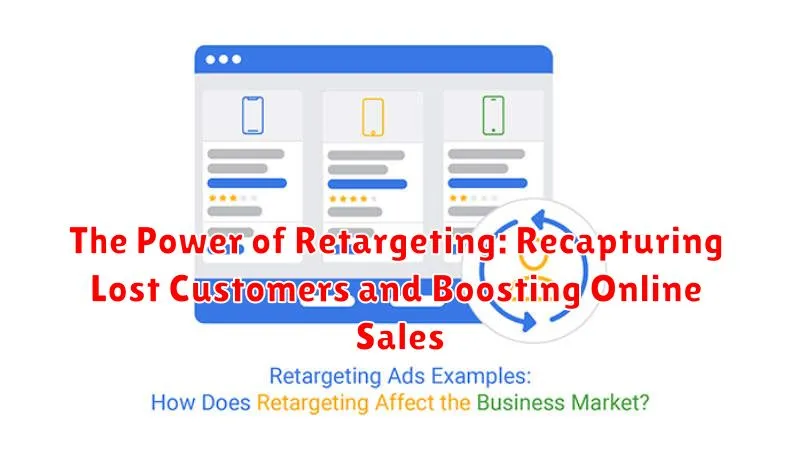
In today’s competitive digital landscape, capturing the attention of potential customers and converting them into paying clients is paramount for any business. Many businesses focus their efforts on attracting new customers, often overlooking a valuable segment: those who have already expressed interest but abandoned their shopping carts or left the website without making a purchase. Retargeting presents a powerful solution to recapture these lost customers and boost online sales. This effective strategy leverages data and consumer behavior to re-engage prospects, reminding them of their initial interest and guiding them back toward completing a purchase. Retargeting campaigns can significantly improve your return on investment (ROI) and contribute to sustained business growth. This article will explore the power of retargeting, delving into its mechanisms, benefits, and best practices for maximizing its impact.
Retargeting, also known as remarketing, allows businesses to strategically re-engage users who have previously interacted with their website, ads, or mobile app. By utilizing cookies and tracking pixels, businesses can identify these individuals and deliver tailored advertisements across various platforms, including social media and search engines. This personalized approach reminds potential customers of products or services they viewed, abandoned in their carts, or added to their wishlists. Retargeting campaigns can be highly effective in boosting online sales by capitalizing on existing interest and nurturing leads toward conversion. They offer a second chance to connect with potential customers and offer compelling reasons to complete a purchase. This article will provide a comprehensive overview of retargeting strategies and demonstrate how they can help you recapture lost customers and drive significant growth in your online sales.
Understanding Retargeting Ads and Their Benefits
Retargeting, also known as remarketing, is a powerful digital marketing strategy that allows you to reconnect with users who have previously interacted with your website or online store. It works by tracking these users through cookies and displaying targeted ads as they browse other websites or use social media platforms. This ensures your brand stays top-of-mind and encourages users to return and complete a purchase.
The core benefit of retargeting lies in its ability to re-engage potentially interested customers who may have been distracted or simply needed more time to decide. By strategically reminding them of products they’ve viewed or added to their cart, retargeting significantly increases the likelihood of a conversion. Further benefits include improved brand visibility and a higher return on investment (ROI) compared to traditional display advertising.
Setting Up Retargeting Campaigns for Your Online Store
Setting up retargeting campaigns involves a few key steps. First, you’ll need to install a retargeting pixel on your website. This snippet of code tracks visitor behavior and allows you to target them with personalized ads later. Different platforms offer their own pixels. Ensure you choose one compatible with your chosen advertising platform.
Next, define your audience segments. This could be based on specific product pages visited, items added to cart, or past purchases. Granular segmentation allows for highly targeted campaigns. Once your segments are defined, you need to create your retargeting ads.
Tailor your ad creatives to the specific segment. For example, someone who abandoned their cart might respond well to a reminder ad showcasing the items they left behind, perhaps with a limited-time discount. Finally, launch your campaigns and continuously monitor their performance, making adjustments as necessary.
Choosing the Right Retargeting Platforms for Your Needs
Selecting the right retargeting platform is crucial for maximizing your campaign’s effectiveness. Several key factors should influence your decision. Reach is paramount; consider how many potential customers the platform can access. Cost is another significant consideration, with platforms offering various pricing models.
Integration with your existing marketing tools and analytics dashboards simplifies campaign management and tracking. Also, evaluate the platform’s targeting options, ensuring they align with your specific needs, such as demographic, behavioral, or interest-based targeting.
Finally, consider the reporting and analytics capabilities. Robust reporting features provide valuable insights into campaign performance, enabling data-driven optimization.
Creating Effective Retargeting Ads That Convert
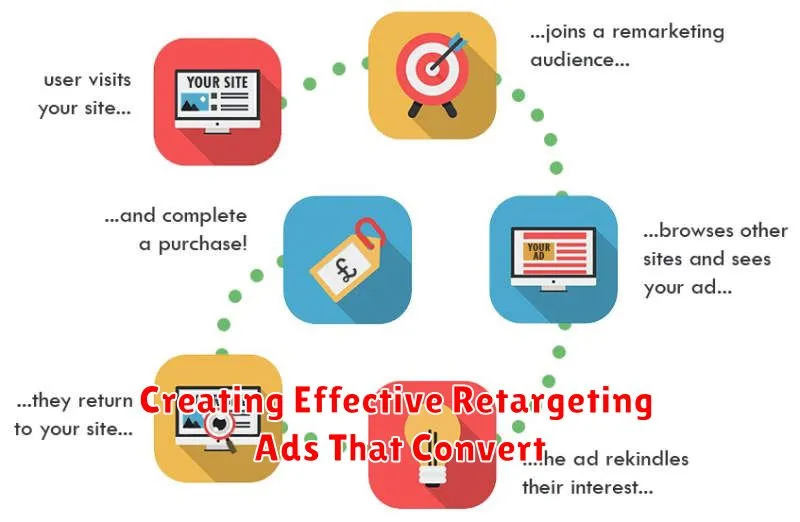
Crafting compelling retargeting ads requires a strategic approach. Relevance is key. Remind users why they were initially interested in your product. Highlight its unique selling propositions and address any potential hesitations they might have had.
Strong visuals are crucial for grabbing attention. Use high-quality images or videos that showcase your product in action. Keep the messaging concise and clear, focusing on a single call to action. Encourage immediate action with time-sensitive offers or limited-time discounts.
A/B testing different ad variations is essential. Experiment with various visuals, copy, and calls to action to determine what resonates best with your target audience. Analyze the performance metrics and refine your campaigns based on the data.
Finally, ensure your landing page experience aligns seamlessly with the ad. A consistent message and design will reinforce trust and encourage conversions. A clear path to purchase, with minimal distractions, is crucial for maximizing your return on investment.
Segmenting Your Audience for Personalized Retargeting Campaigns
Segmentation is crucial for maximizing the impact of retargeting. Generic retargeting ads can be ineffective and even annoy potential customers. By dividing your audience into specific groups based on their behavior and interactions with your online store, you can deliver highly relevant ads that resonate with their individual needs and interests.
Consider these segmentation strategies:
- Website behavior: Target users who visited specific product pages but didn’t complete a purchase. Show them retargeting ads featuring those exact products or similar items.
- Shopping cart abandonment: Remind users about the items they left in their carts with personalized ads showcasing the products and offering incentives like free shipping or discounts to encourage purchase completion.
- Past purchases: Target previous customers with ads for related products, complementary items, or new arrivals based on their past purchase history. This helps increase customer lifetime value.
- Engagement level: Segment users based on their level of engagement with your website or ads. Users who have interacted more frequently can be shown different ads compared to those who have only visited once.
By strategically segmenting your audience and tailoring your retargeting ads accordingly, you can significantly improve click-through rates, conversion rates, and ultimately, your return on investment.
Tracking and Measuring the Success of Your Retargeting Ads
Effectively tracking and measuring your retargeting campaigns is crucial for optimizing performance and maximizing ROI. Key metrics provide insights into how your ads are performing and where adjustments are needed.
Focus on website conversions such as purchases, sign-ups, or form submissions. Track the number of conversions generated by your retargeting ads to understand their direct impact on your business goals.
Monitor your click-through rate (CTR). A high CTR indicates that your ads are resonating with your target audience and driving traffic back to your website. Compare CTRs across different retargeting segments to identify top performers.
View-through conversions are another important metric. While a user may not click immediately, seeing your retargeting ad can influence their later decision to convert. Track view-through conversions to understand the broader impact of your campaigns.
By closely analyzing these metrics, you can continuously refine your retargeting strategy for optimal results.
Best Practices for Retargeting Ad Creatives
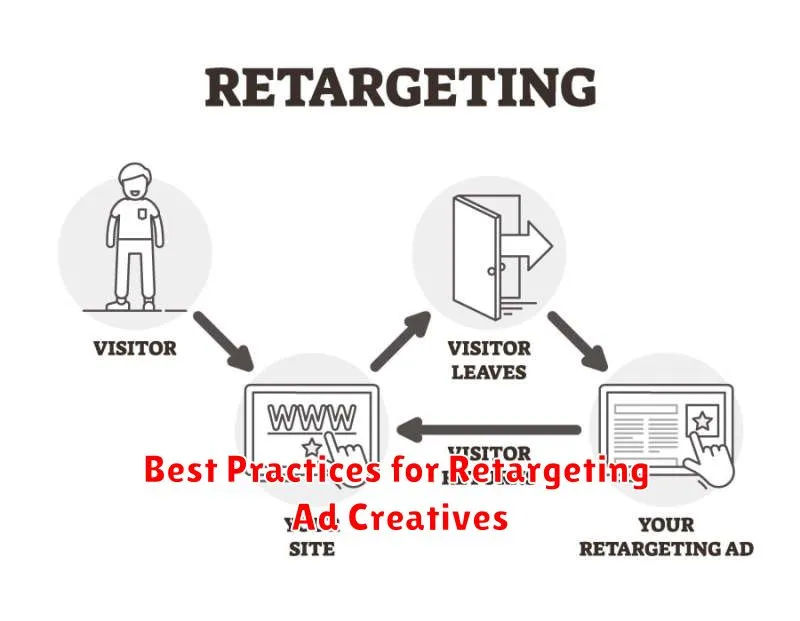
Effective retargeting campaigns hinge on compelling ad creatives. Follow these best practices to maximize your impact:
Tailor Creatives to Audience Segments
Segment your audience based on their interaction with your website. Craft specific messaging that resonates with their past behavior. For example, someone who viewed a product page should see ads featuring that product, while someone who abandoned their cart might respond better to a discount offer.
Refresh Your Ads Regularly
Combat ad fatigue by regularly updating your ad creatives. Introduce new visuals, messaging, and offers to keep your audience engaged. A/B testing different variations can help identify top performers.
Maintain Brand Consistency
Ensure your retargeting ads align with your overall brand aesthetic and messaging. Consistent branding reinforces recognition and builds trust.
Use High-Quality Images and Videos
Invest in visually appealing creatives that capture attention. High-resolution images and videos can significantly improve click-through rates.
Avoiding Common Retargeting Mistakes
Retargeting, while powerful, can backfire if not executed carefully. A common mistake is over-saturation. Bombarding users with the same ad repeatedly can lead to ad fatigue and negative brand perception. Implement frequency capping to limit the number of times a user sees your ad within a given timeframe.
Another pitfall is failing to segment your audience. Not all website visitors are equal. Someone who added items to their cart is much further down the sales funnel than someone who simply browsed your homepage. Create separate retargeting campaigns tailored to specific user behaviors for better results.
Ignoring the “burn pixel” is a crucial oversight. This code removes users from your retargeting audience after they convert, preventing wasted ad spend and further annoyance. Ensure this is implemented correctly to optimize your campaign efficiency.
Finally, lack of ad refresh can also hinder performance. Using the same creative for extended periods can become stale and ineffective. Regularly update your ad copy and visuals to maintain user engagement and improve click-through rates.
