
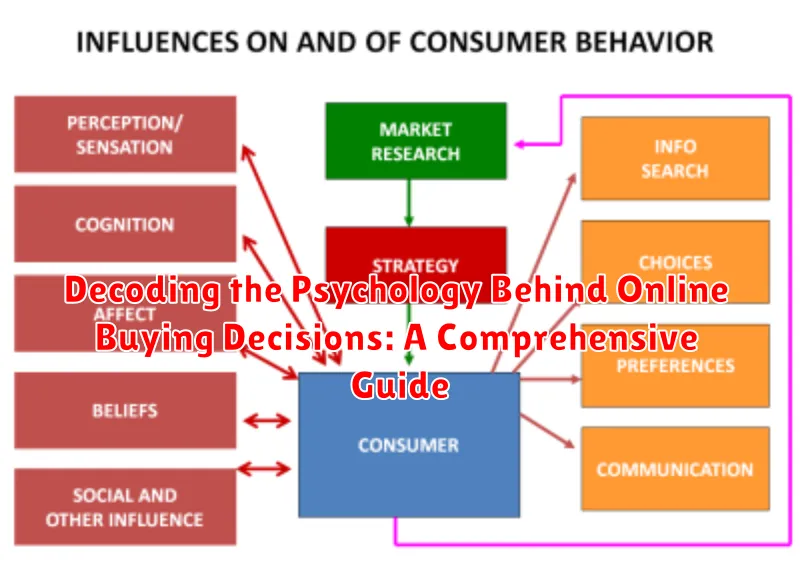
In today’s digital age, understanding the psychology behind online buying decisions is crucial for businesses and marketers alike. This comprehensive guide delves into the intricate workings of consumer minds, exploring the factors that influence their choices in the vast online marketplace. From the initial stages of product discovery to the final click of the “purchase” button, we’ll decode the psychology of online buying, providing valuable insights into the decision-making process. Whether you’re a seasoned e-commerce professional or just starting out, this guide will equip you with the knowledge to effectively target your audience and optimize your online sales strategies.
This exploration of the psychology of online buying decisions will cover a range of key topics. We’ll examine the influence of online reviews and social proof, the impact of website design and user experience on buying behavior, and the role of emotions and cognitive biases in shaping purchasing choices. By understanding these elements, you’ll be better prepared to craft compelling marketing campaigns, create persuasive product descriptions, and ultimately, drive conversions. This comprehensive guide offers a deep dive into the psychology behind online buying, providing a practical framework for success in the competitive world of online commerce.
Understanding the Consumer Mindset in the Digital Age
The digital age has fundamentally reshaped the consumer mindset, creating a new breed of online shoppers with unique characteristics and expectations. Convenience is paramount, with consumers prioritizing seamless browsing, quick purchases, and efficient delivery.
Information accessibility also plays a crucial role. Today’s consumers are empowered to research products extensively, compare prices, and read reviews before making a purchase. This has led to increased price sensitivity and a demand for transparency from brands.
Social influence is another defining factor. Online shoppers are heavily influenced by peer recommendations, social media trends, and online communities. Brand reputation and online reviews significantly impact purchasing decisions.
Finally, the expectation of personalization has grown. Consumers expect tailored recommendations, targeted advertising, and personalized experiences that cater to their individual needs and preferences. This demand for personalized interactions shapes how brands connect with their online audience.
Key Psychological Factors Influencing Online Purchases
Several key psychological factors play a crucial role in shaping online buying decisions. Understanding these elements is essential for businesses seeking to optimize their online presence and marketing strategies.
Motivation drives purchasing behavior. Needs, wants, and desires, whether conscious or unconscious, push consumers to seek products or services online. Identifying these motivators is key to effectively targeting potential customers.
Perception, how consumers interpret information, significantly influences their choices. Website design, product presentation, and reviews all contribute to the consumer’s perception of value and quality.
Learning from past experiences, both positive and negative, shapes future buying decisions. Online reviews and ratings play a powerful role in this process, informing consumer perceptions and impacting purchasing choices.
Attitudes and Beliefs significantly influence online purchasing decisions. Pre-existing opinions about a brand or product category can strongly sway a consumer towards or away from a particular purchase.
The Role of Emotions in Online Buying Decisions
Emotions play a significant role in shaping online consumer behavior. While logic influences some decisions, emotional responses often drive purchasing choices. Marketing strategies that tap into these emotional triggers can be highly effective.
Positive emotions like excitement, joy, and trust can encourage purchases. For example, a well-crafted advertisement highlighting the joy of owning a new gadget can stimulate a desire to buy. Building trust through secure payment gateways and positive customer reviews can also significantly impact purchase decisions.
Conversely, negative emotions like fear, anxiety, or frustration can deter purchases. A confusing website navigation or a complicated checkout process can lead to frustration and abandoned carts. Addressing these negative emotional triggers through streamlined user experience and clear communication is crucial.
Cognitive Biases Affecting Online Shoppers
Cognitive biases, inherent shortcuts in our thinking, significantly influence online buying decisions. Understanding these biases is crucial for both consumers and marketers.
Confirmation bias leads shoppers to favor information confirming pre-existing beliefs, potentially overlooking negative reviews. Anchoring bias causes over-reliance on the first piece of information encountered, such as an initial high price making a subsequent discount seem more appealing. The bandwagon effect influences shoppers to purchase popular items, driven by the perception of social proof.
Availability heuristic makes recent or memorable information, like a news story about a product malfunction, disproportionately influence decisions. Loss aversion, the tendency to feel losses more strongly than gains, drives shoppers to act on limited-time offers or scarcity tactics.
Neuromarketing and its Impact on Online Sales

Neuromarketing delves into the subconscious processes driving consumer behavior. By employing techniques like eye-tracking, EEG, and fMRI, researchers gain insights into how the brain responds to marketing stimuli. This understanding allows businesses to optimize their online presence for maximum impact.
Eye-tracking studies reveal where shoppers focus their attention on webpages, highlighting the importance of visual hierarchy and placement of key elements like call-to-action buttons. EEG measures brainwave activity, offering insights into emotional responses to different marketing messages. fMRI scans reveal brain activity in specific regions, providing a deeper understanding of how the brain processes information related to products and brands.
By leveraging these insights, businesses can create more persuasive online experiences. This includes optimizing website design, crafting targeted advertising campaigns, and personalizing product recommendations, ultimately boosting conversion rates and driving online sales.
Strategies for Optimizing the Online Buying Experience
Optimizing the online buying experience involves understanding and addressing key psychological drivers influencing consumer behavior. This requires a strategic approach focused on streamlining the purchase process and fostering a positive customer journey.
Simplify the checkout process. A complicated or lengthy checkout process is a major cause of cart abandonment. Minimize required fields, offer guest checkout options, and clearly display shipping costs and delivery times upfront.
Personalize the shopping experience. Leverage data to offer personalized recommendations, targeted promotions, and customized content. This fosters a sense of individual attention and increases the likelihood of conversion.
Offer multiple payment options. Provide various payment gateways to cater to diverse customer preferences. This includes credit/debit cards, digital wallets, and other popular payment methods.
Optimize for mobile devices. Ensure your website is responsive and offers a seamless mobile shopping experience. A growing number of online purchases are made on mobile devices, so mobile optimization is crucial.
Leveraging Social Proof and Testimonials
Social proof plays a crucial role in influencing online buying decisions. Consumers often look to others for validation before making a purchase, especially in the digital realm where tangible experiences are limited.
Testimonials are a powerful form of social proof. Genuine testimonials from satisfied customers can significantly impact purchasing behavior. They provide real-life examples of positive product experiences, reducing perceived risk and increasing buyer confidence. Highlighting testimonials prominently on product pages and throughout the website can encourage conversions.
Beyond testimonials, leveraging other forms of social proof can further enhance the buying experience. Displaying customer reviews, ratings, and social media shares contributes to a sense of community and trustworthiness. Showcasing the number of purchases or the scarcity of a product can create a sense of urgency and desirability.
Building Trust and Credibility Online
In the digital marketplace, trust is paramount. Consumers are hesitant to share personal information or make purchases from websites they perceive as untrustworthy. Establishing credibility involves demonstrating authenticity, expertise, and reliability.
Several key strategies can bolster online trust. Clearly displaying contact information, including a physical address and phone number, fosters a sense of legitimacy. Transparency regarding data privacy policies and security measures is also crucial. Openly communicating how customer data is collected, used, and protected helps alleviate concerns.
Third-party endorsements, such as security badges and industry certifications, offer further validation. These symbols signal adherence to specific standards and practices, assuring customers of a website’s commitment to security and ethical conduct. Building trust is an ongoing process, and consistently demonstrating these qualities cultivates a loyal customer base.
The Importance of User Experience (UX) in E-commerce
User experience (UX) plays a critical role in shaping online buying decisions. A seamless and enjoyable UX encourages conversions and fosters customer loyalty. Conversely, a frustrating or confusing experience can quickly lead to cart abandonment and damage a brand’s reputation.
Key elements of a positive e-commerce UX include a clean and intuitive website design, easy navigation, a streamlined checkout process, and effective customer support. When these elements are well-executed, they create a sense of ease and confidence, encouraging users to complete their purchases.
Mobile optimization is also essential. With a significant portion of online shopping occurring on mobile devices, a responsive design that adapts to different screen sizes is crucial for a positive UX. This ensures a consistent and user-friendly experience regardless of how customers access the website.
Ultimately, a well-designed UX removes friction from the buying process, leading to increased sales, improved customer satisfaction, and a stronger brand presence in the competitive e-commerce landscape.
The Future of Consumer Psychology in Online Retail
The future of online retail is inextricably linked to understanding the evolving psychology of the consumer. Predictive analytics will play a key role, analyzing vast datasets to anticipate consumer needs and personalize the shopping journey. This will move beyond simple product recommendations to encompass customized experiences, from website navigation to targeted promotions.
Augmented Reality (AR) and Virtual Reality (VR) are poised to transform how consumers interact with products online. Trying on clothes virtually or visualizing furniture in their homes will bridge the gap between the digital and physical, influencing purchasing decisions in new ways. The ability to create immersive and engaging experiences will become a key differentiator for online retailers.
Emotional AI is another emerging area, focusing on recognizing and responding to customer emotions. By analyzing facial expressions, voice tone, and text sentiment, online retailers can tailor their interactions to create more empathetic and personalized experiences, fostering stronger customer connections and driving brand loyalty. Ethical considerations surrounding data privacy and responsible AI deployment will be paramount as these technologies mature.
